
Quick Answer: How should you spend 11 days in Egypt?
The best 11 days Egypt itinerary for first-time visitors combines Cairo and Giza, ancient temples in Luxor, a four-night Nile cruise, and Aswan, with an optional excursion to Abu Simbel. Spend four nights in Cairo, four aboard a Luxor-to-Aswan cruise, one in Aswan, and a final night in Cairo. This 11-day, 10-night route balances Egypt’s major historical attractions with realistic travel time.
Eleven days is enough to experience several distinct sides of Egypt without treating every day as a race between monuments. You can stand before the Great Pyramid of Giza, explore the Grand Egyptian Museum, walk through painted royal tombs in Luxor, sail past Nile-side villages, and discover the temples of southern Egypt.
The challenge is not deciding whether Egypt has enough attractions. It is choosing a route that connects them efficiently.
Cairo and Giza are in northern Egypt. Luxor lies much farther south, while Aswan is farther upstream. A Nile cruise typically connects Luxor and Aswan, but it does not travel to Cairo or the Giza Pyramids. Understanding those relationships helps you avoid unnecessary transfers and unrealistic sightseeing schedules.
For most first-time visitors planning an Egypt trip in 2027, the strongest approach is to explore Cairo first, fly to Luxor, cruise south to Aswan, and return to Cairo before the international departure.
This guide includes an achievable day-by-day itinerary, alternative routes, transportation decisions, cruise comparisons, travel budgets, seasonal advice, and practical recommendations for families, couples, and independent travelers.
11 Days in Egypt at a Glance
This recommended itinerary assumes you arrive at Cairo International Airport and depart from Cairo 11 calendar days later.
It includes ten nights of accommodation, a four-night Nile cruise, and one domestic journey in each direction between Cairo and Upper Egypt.
| Day | Main Destination | Activities | Overnight |
| Day 1 | Cairo | Arrival, hotel check-in, rest | Cairo |
| Day 2 | Giza | Pyramids, Great Sphinx, Grand Egyptian Museum | Cairo |
| Day 3 | Saqqara and Dahshur | Early pyramids and ancient Memphis | Cairo |
| Day 4 | Cairo | Historic Cairo, churches, mosques, bazaar | Cairo |
| Day 5 | Luxor | Fly to Luxor, Karnak, Luxor Temple, cruise embarkation | Nile cruise |
| Day 6 | Luxor | Valley of the Kings, Hatshepsut Temple, West Bank | Nile cruise |
| Day 7 | Edfu and Kom Ombo | Temple visits and Nile sailing | Nile cruise |
| Day 8 | Aswan | Philae Temple and Aswan sightseeing | Nile cruise |
| Day 9 | Abu Simbel / Aswan | Optional Abu Simbel excursion, hotel check-in | Aswan |
| Day 10 | Aswan and Cairo | Relaxed Aswan morning, flight to Cairo | Cairo |
| Day 11 | Cairo | Airport transfer and international departure | — |
Recommended duration: 11 days and 10 nights.
Best travel style: Private sightseeing in Cairo and Luxor combined with a scheduled Nile cruise.
Ideal for: First-time visitors, couples, history enthusiasts, families with older children, and travelers seeking a mix of guided sightseeing and relaxation.
Most important booking decision: Confirm the actual cruise departure day before purchasing domestic flights.
The schedule above is a planning model, not a guaranteed sailing timetable. Cruise itineraries differ by vessel, departure day, navigation conditions, and included excursions. Temple visits may move between days to match the confirmed sailing.
Is 11 Days Enough to Visit Egypt?

Yes. Eleven days is enough for a rewarding first trip through Egypt’s most important historical destinations, provided you concentrate on Cairo, Luxor, and Aswan rather than attempting to visit every region.
An 11-day holiday generally gives you nine days between arrival and departure, although some of those days will include airport transfers, hotel changes, and cruise embarkation.
That distinction matters.
A traveler who counts every day as a full sightseeing day may unintentionally create an exhausting schedule. A traveler who allows for transfers and recovery will usually enjoy the same major attractions more.
What can you realistically see in 11 days?
A well-designed itinerary can include:
- The Great Pyramid of Khufu and the other major pyramids of Giza.
- The Great Sphinx and surrounding archaeological landscape.
- The Grand Egyptian Museum.
- Saqqara’s Step Pyramid and the Dahshur pyramid fields.
- Historic Islamic and Coptic Cairo.
- Karnak Temple and Luxor Temple.
- The Valley of the Kings and Hatshepsut’s Mortuary Temple.
- The Temple of Horus at Edfu.
- Kom Ombo Temple.
- Philae Temple and the distinctive landscapes of Aswan.
- Abu Simbel, if you are comfortable with a substantial day excursion.
- Several opportunities to experience contemporary Egyptian culture, food, and Nile scenery.
Not every attraction requires equal time.
The Great Pyramid deserves a slower visit than a short photo stop. Karnak benefits from a knowledgeable guide who can explain the development of its enormous religious complex. A relaxed afternoon beside the Nile may contribute as much to your memories as another rushed monument.
What should you leave out?
An 11-day trip does not comfortably accommodate every major destination.
Trying to combine Cairo, Alexandria, Luxor, Aswan, Abu Simbel, Hurghada, Sharm El Sheikh, Siwa Oasis, and the White Desert into one journey would create excessive transportation time.
For most travelers, it is better to choose one clear theme.
The classic route focuses on ancient Egypt and the Nile. A second option combines historical attractions with the Red Sea. A third prioritizes independent exploration and more time in Luxor and Aswan without a multi-night cruise.
The following itinerary uses the classic route because it delivers a strong combination of cultural depth, logistical efficiency, and memorable landscapes.
The Complete 11 Days Egypt Itinerary: Day-by-Day Guide
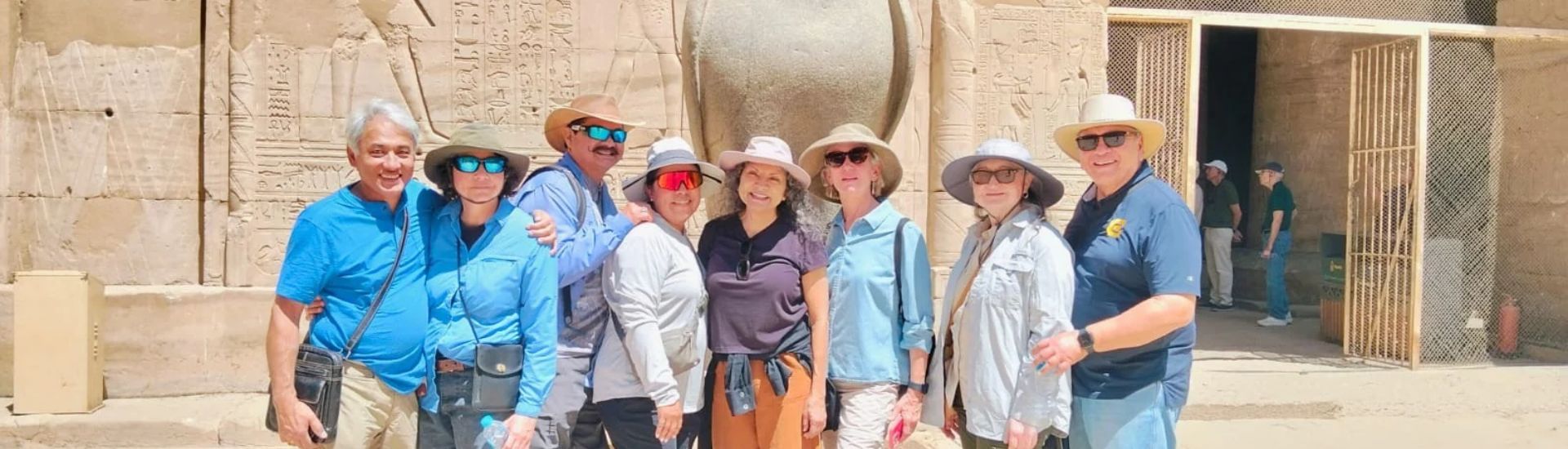
Day 1: Arrive in Cairo and Settle Into Egypt
Main focus: Arrival and recovery
Suggested sightseeing intensity: Very light
Your journey begins at Cairo International Airport, the country’s principal international gateway.
After immigration, baggage collection, and customs, arrange a transfer to your hotel in Cairo or Giza.
Depending on traffic and your accommodation location, the journey may be considerably longer than the distance suggests. Cairo is a large metropolitan area, and traffic conditions vary significantly by time of day.
For the first night, choose a hotel based on where you intend to spend the following day.
A hotel in Giza may be convenient for the pyramids and Grand Egyptian Museum. Central Cairo offers easier access to downtown restaurants, the Nile waterfront, and several historic districts. Zamalek is another option for travelers who prefer a relatively calm urban setting.
There is no universally best neighborhood. Your preferred accommodation style, budget, and itinerary matter more than a generic hotel ranking.
What should you do after arriving?
If your flight lands in the morning and you feel rested, consider a gentle introduction to Cairo.
A relaxed lunch, a walk near your hotel, or a sunset view of the Nile is enough.
Travelers staying in central Cairo might enjoy a short evening outing to a nearby restaurant. Those staying in Giza can choose a hotel terrace with views toward the pyramid plateau.
Avoid committing to a prepaid archaeological excursion immediately after a long international flight. Delays at immigration, unpredictable arrival times, and tiredness can turn an otherwise enjoyable activity into unnecessary pressure.
If you arrive late at night, go directly to the hotel.
First-night practical checklist
Before sleeping, confirm your next day’s pickup time, museum reservation, and transportation arrangements.
Keep a copy of your passport and travel insurance information available offline. Obtain some Egyptian pounds for small expenses, although many hotels and major tourist services accept card payments.
Ensure your phone has reliable connectivity through roaming, a local SIM, or an appropriately supported eSIM.
It is also useful to identify your hotel on a map and save its address in English and Arabic.
Recommended overnight: Cairo or Giza.
Planning tip: If your international flight arrives after midnight, treat the following morning as a recovery period rather than booking an early pyramid visit.
Day 2: Explore the Giza Pyramids, Great Sphinx and Grand Egyptian Museum
Main focus: Egypt’s Old Kingdom and ancient collections
Suggested sightseeing intensity: High
Begin your second day with one of Egypt’s most recognizable archaeological landscapes: the Giza Plateau.
The plateau contains the pyramids of Khufu, Khafre, and Menkaure, alongside smaller pyramids, tombs, ancient causeways, and the Great Sphinx.
These monuments developed during Egypt’s Fourth Dynasty in the Old Kingdom, approximately 4,500 years ago.
The Great Pyramid was constructed for Pharaoh Khufu and remains the largest of the three principal pyramids at Giza.
Understanding the site as a royal funerary landscape, rather than simply three isolated monuments, makes the visit more rewarding.
Morning: Visit the Pyramids of Giza
Allow approximately three to four hours for a substantial visit to the Giza Pyramids.
Start with the pyramid complexes and their surrounding archaeological remains.
The Great Pyramid dominates the landscape, but take time to understand how Khafre’s pyramid appears taller from some angles because it stands on higher ground.
Menkaure’s smaller pyramid offers another perspective on how royal pyramid building evolved.
A panoramic viewpoint can help visitors appreciate the spatial relationship between the major pyramids, the desert, and the modern city.
The Giza Plateau is extensive, and walking between monuments can be tiring, especially in warm weather.
Private transport within permitted areas, where available, can reduce unnecessary walking.
Should you go inside the Great Pyramid?
Entering the Great Pyramid is an optional experience rather than an essential part of every visit.
The interior passages are narrow, steep in places, and can feel warm or enclosed. Visitors expecting richly decorated burial chambers may be surprised by the relatively plain interior.
The attraction is the architectural experience of moving inside one of the world’s most remarkable ancient structures.
Travelers with claustrophobia, mobility limitations, or difficulty climbing steep passages may prefer to appreciate the pyramid from outside.
Interior access typically requires a separate ticket and may be subject to temporary restrictions.
Visit the Great Sphinx
The Great Sphinx is associated with the pyramid complex of Khafre and stands near the eastern edge of the Giza Plateau.
Its lion body and human head have encouraged centuries of discussion about Egyptian kingship, royal symbolism, and the monument’s original purpose.
Although many popular stories claim that the Sphinx conceals secret chambers or entirely unknown civilizations, archaeological interpretations should be distinguished from speculation.
For visitors, the Sphinx offers an opportunity to understand how monumental sculpture and pyramid architecture formed part of the same royal landscape.
Allow time for the surrounding Valley Temple area and photographs from permitted viewpoints.
Afternoon: Discover the Grand Egyptian Museum
After lunch, continue to the Grand Egyptian Museum, located near the Giza Plateau.
The museum fully opened to the public in November 2025, making it a major attraction for travelers visiting in 2027.
Its displays include the Tutankhamun galleries, extensive ancient Egyptian collections, monumental sculptures, and Khufu’s Boats Museum.
The museum provides important historical context for the monuments you have just visited.
Objects associated with royal burial practices, artistic production, religious beliefs, and everyday life help explain the people behind the pyramids.
Allocate at least three hours for a focused museum visit. Visitors with a strong interest in Egyptology may prefer four or more hours.
Do not assume the museum and the pyramids can both be explored exhaustively in one day. A combined visit is convenient geographically, but it requires selectivity.
If your priority is a deep museum experience, consider moving the Grand Egyptian Museum to another day.
An important 2027 museum planning note
The Grand Egyptian Museum uses official online ticketing, and entry arrangements should be checked before travel.
As of October 2026, the museum operates daily, with longer gallery hours on Wednesdays and Saturdays. Its published arrangements and exhibition access may change before your 2027 visit.
Reserve the appropriate entry date and time through the official museum ticketing system rather than assuming that tickets will always be available on arrival.
Recommended overnight: Cairo or Giza.
What to avoid: Booking the Giza Plateau, a comprehensive Grand Egyptian Museum visit, Saqqara, and a Nile dinner cruise as a single sightseeing marathon.
Day 3: Discover Saqqara, Memphis and Dahshur
Main focus: How pyramid architecture developed
Suggested sightseeing intensity: Moderate to high
The third day explores the archaeological landscapes south of Giza.
This is one of the most educational additions to an Egypt itinerary because it reveals that the Great Pyramid was not the starting point of pyramid construction.
Long before the famous pyramids at Giza were completed, Egyptian architects experimented with different forms, building techniques, and royal funerary complexes.
Saqqara, Memphis, and Dahshur help explain that development.
Morning: Saqqara and the Step Pyramid of Djoser
Begin at Saqqara, an extensive necropolis associated with ancient Memphis.
Its best-known monument is the Step Pyramid of King Djoser, generally associated with the architect Imhotep and Egypt’s Third Dynasty.
The pyramid consists of six stepped levels and represents a major development in monumental stone construction.
Unlike the smooth-sided pyramids at Giza, Djoser’s monument visibly preserves a stepped architectural form.
The wider complex includes ceremonial spaces, courtyards, architectural features imitating earlier building traditions, and numerous tombs from different periods.
Saqqara is not just one pyramid. It is an archaeological landscape that continued to develop over many centuries.
Some tombs feature scenes of agriculture, food production, hunting, and professional activities. These images can offer a fascinating contrast to the formal royal monuments at Giza.
Access to individual tombs and interiors varies, so decide which are worth prioritizing after reviewing current ticket options.
Midday: The Ancient Capital of Memphis
Continue toward the archaeological remains of ancient Memphis.
Memphis served as an important political and administrative center during multiple periods of ancient Egyptian history.
Visitors should not expect to walk through a fully preserved ancient city.
Instead, the accessible archaeological area contains selected surviving monuments and artifacts, including monumental sculpture.
A relatively brief stop can provide useful geographical and historical context.
The connection between Memphis and the surrounding royal necropolises helps explain why so many important pyramid sites developed in this part of Egypt.
Afternoon: The Bent Pyramid and Red Pyramid at Dahshur
Your final major stop is Dahshur Necropolis.
Dahshur is strongly associated with Pharaoh Sneferu, the father of Khufu.
The Bent Pyramid is particularly memorable because its angle changes partway up the structure.
That unusual profile demonstrates the technical challenges faced by ancient builders during the development of smooth-sided pyramids.
The nearby Red Pyramid represents a significant step toward the form later used at Giza.
Together, these monuments provide a compelling historical sequence: Djoser’s Step Pyramid at Saqqara, Sneferu’s experiments at Dahshur, and Khufu’s Great Pyramid at Giza.
You do not need to enter every available pyramid interior to appreciate this development.
For travelers who enjoy archaeology, the exterior architecture and landscape can be just as revealing.
Is visiting all three sites in one day realistic?
Yes, with an early start and efficient private transport.
However, detailed tomb visits at Saqqara can occupy much of the day. Adding Memphis and Dahshur requires reasonable time management.
If you prefer a slower experience, prioritize Saqqara and Dahshur and treat Memphis as optional.
The objective is to understand Egypt’s architectural development, not simply collect another three place names.
Recommended overnight: Cairo.
Alternative for families: Spend longer at Saqqara, visit one additional pyramid site, and return to Cairo earlier for a relaxed afternoon.
Day 4: Explore Islamic Cairo, Coptic Cairo and Khan El Khalili
Main focus: Egyptian history beyond the pharaohs
Suggested sightseeing intensity: Moderate
After two days of pyramids and museums, dedicate your fourth day to Cairo’s religious, architectural, and cultural heritage.
Modern Cairo is not simply a city built beside ancient ruins. Its historic districts preserve stories from Roman, Christian, Islamic, medieval, Ottoman, and modern periods.
The day is most enjoyable when you select two principal historic areas instead of trying to visit every famous mosque, church, and market.
Morning: Discover Coptic Cairo
Begin in Coptic Cairo, an area associated with Egypt’s longstanding Christian heritage.
Important sites include the Hanging Church, the Church of Saints Sergius and Bacchus, and the nearby Ben Ezra Synagogue, subject to current access arrangements.
The Hanging Church is especially notable for its location above a gatehouse of the Roman-era Babylon Fortress.
Its architectural details, religious art, and historical significance provide a different perspective on Egyptian identity.
A knowledgeable guide can explain the relationship between the area’s Roman foundations and later Christian monuments.
As these are religious sites, dress respectfully and be mindful of active services or access restrictions.
Allow approximately two hours for a focused visit rather than rushing from one building to another.
Midday: Historic Islamic Cairo
Continue toward the historic Islamic districts.
Cairo became a major political, commercial, religious, and intellectual center under successive Islamic dynasties.
The surviving urban landscape includes mosques, madrasas, markets, gates, and historic residences.
Al-Muizz Street is particularly rewarding for travelers interested in architecture.
Several monuments stand close together, allowing visitors to experience the character of medieval Cairo on foot.
You may also choose the Citadel of Saladin and the Mosque of Muhammad Ali, which offer different architectural and historical perspectives.
Combining every major mosque with the Citadel and Coptic Cairo would make the day unnecessarily demanding.
Instead, prioritize the historic streets or the Citadel based on your interests.
Afternoon: Khan El Khalili Bazaar
Continue to Khan El Khalili Bazaar, one of Cairo’s best-known traditional shopping districts.
The surrounding streets include shops selling lamps, jewelry, textiles, spices, souvenirs, and decorative objects.
The appeal extends beyond shopping.
Old building facades, narrow lanes, historic cafés, and the movement of everyday commercial life create a distinctly different atmosphere from the pyramid plateau.
Take time for a tea or coffee break.
If you intend to buy souvenirs, compare prices and agree on the amount before purchasing. Bargaining is common in some shops, but it should remain friendly and voluntary.
You do not need to make a purchase to enjoy the bazaar.
Evening: Prepare for Luxor
Your next day involves a domestic flight and cruise embarkation.
Confirm your flight departure, airport pickup, checked-baggage allowance, and the cruise ship’s boarding location.
Pack any medication, travel documents, and essential electronics in hand luggage.
If your cruise follows a fixed sailing schedule, this transfer is one of the most important connections of the entire holiday.
Avoid scheduling a late-night activity that could leave you tired before an early departure.
Recommended overnight: Cairo.
Planning tip: Travelers who prefer art and museums can substitute part of this day with the Egyptian Museum in Tahrir Square or another current cultural exhibition.
Day 5: Fly to Luxor, Visit Karnak and Board Your Nile Cruise
Main focus: Arrival in ancient Thebes and Nile cruise embarkation
Suggested sightseeing intensity: Moderate, depending on flight timing
Luxor is one of Egypt’s greatest archaeological destinations.
Ancient Thebes developed into a major religious and political center, especially during the New Kingdom, when Egyptian rulers created elaborate temples and royal burial landscapes.
The city occupies both banks of the Nile.
The East Bank contains Karnak and Luxor Temple, while the West Bank is famous for royal tombs and mortuary temples.
This geographical division helps organize your sightseeing.
Morning: Fly from Cairo to Luxor
An early domestic flight is generally the most practical choice for this itinerary.
The flight itself is relatively short, but airport check-in, transfers, baggage collection, and possible delays make the overall journey longer.
Allow enough time to reach your cruise vessel before its designated embarkation deadline.
Cruise operators may require boarding before lunch or at a specified time. Excursions can begin before or after embarkation depending on the ship’s schedule.
If a suitable early flight is unavailable, it may be better to fly to Luxor the previous evening and adjust your Cairo allocation.
Do not purchase an inflexible flight until your cruise departure is confirmed.
Explore Karnak Temple
The Karnak Temple complex is among the most important religious sites in ancient Egypt.
Its history spans numerous reigns, and successive pharaohs added structures, inscriptions, gateways, and ceremonial spaces.
The Great Hypostyle Hall is one of its most impressive features.
Its enormous columns communicate the scale of the religious architecture associated with the worship of Amun and the Theban divine family.
Karnak is not a single temple constructed at one moment. It is a vast religious complex shaped by centuries of royal patronage.
A guide can help distinguish the principal building periods and explain how the complex related to the ancient city.
Allow approximately two hours for a focused visit, with additional time for photography and quieter sections.
Visit Luxor Temple
Luxor Temple stands farther south along the Nile’s East Bank.
It is strongly associated with royal renewal and important religious ceremonies, including the Opet Festival.
The processional route connecting Karnak and Luxor Temple is commonly known as the Avenue of Sphinxes.
Its historical role helps visitors understand how the two temples formed part of a connected sacred landscape.
Luxor Temple can be especially atmospheric in late afternoon or after dark when permitted visiting hours allow.
However, cruise excursion schedules may determine when you visit.
Embark on the Nile cruise
After sightseeing, settle into your cabin and familiarize yourself with the vessel.
Most conventional cruise itineraries include accommodation, meals, and scheduled navigation between Luxor and Aswan.
Excursion inclusions vary by booking.
Some packages combine sightseeing, guides, transfers, and admission tickets. Others charge separately for selected services.
Review your specific reservation rather than assuming every activity is included.
The first evening is a good opportunity to enjoy the deck, watch the Nile, and recover from the flight.
Recommended overnight: Nile cruise, first night.
Important: A four-night Luxor-to-Aswan cruise typically follows a fixed weekly departure pattern. The vessel’s actual schedule takes priority over the illustrative day numbers used here.
Day 6: Valley of the Kings, Hatshepsut Temple and Luxor’s West Bank
Main focus: Royal tombs and New Kingdom funerary architecture
Suggested sightseeing intensity: High
The West Bank of Luxor contains some of the most significant archaeological sites in the Nile Valley.
Ancient Egyptians associated the western horizon with the setting sun and the journey into the afterlife.
The area became the location of royal tombs, mortuary temples, and settlements connected with burial rituals.
This day provides an opportunity to understand ancient Egyptian beliefs about death, kingship, and rebirth.
Morning: Valley of the Kings
Begin at the Valley of the Kings.
Unlike the pyramid complexes of the Old Kingdom, New Kingdom rulers often commissioned tombs cut into the rocky hills of western Thebes.
The tombs contain corridors, chambers, inscriptions, and paintings associated with royal funerary beliefs.
Their decoration frequently depicts religious texts and imagery intended to assist the deceased ruler’s transformation and journey through the afterlife.
The specific tombs open to visitors can change due to conservation requirements.
A standard admission ticket does not necessarily include every tomb.
Some famous tombs, including that of Tutankhamun, may require separate tickets when open.
Rather than attempting to enter as many tombs as possible, choose a manageable selection with contrasting decoration and architectural styles.
Visitors often remember the quality of the artwork more clearly when they have time to observe it.
The royal tomb interiors may be warm, narrow, or crowded. Avoid combining too many steep descents if you have mobility concerns.
Visit the Mortuary Temple of Hatshepsut
Continue to the Temple of Hatshepsut at Deir el-Bahari.
Hatshepsut was one of ancient Egypt’s most significant female rulers.
Her mortuary temple is famous for its broad terraces, colonnades, and dramatic location against limestone cliffs.
Its decoration includes scenes associated with religious ceremonies, royal legitimacy, and the expedition to Punt.
The monument illustrates how architecture could communicate royal authority while also serving religious and commemorative purposes.
Spend time observing the relationship between the temple’s architecture and the surrounding landscape.
The visual impact is one of the reasons Deir el-Bahari remains such a memorable stop.
Colossi of Memnon
The Colossi of Memnon are two massive seated statues associated with the mortuary temple of Amenhotep III.
Much of the original temple complex has disappeared, but the statues remain prominent landmarks on the West Bank.
This is generally a shorter visit than the Valley of the Kings or Hatshepsut’s temple.
It can provide useful context for the wider royal funerary landscape.
Should you add Medinet Habu?
Medinet Habu, associated with Ramesses III, is an excellent addition for travelers particularly interested in temple reliefs and ancient Egyptian military imagery.
However, it requires additional time.
If your cruise begins sailing during the afternoon, prioritize the Valley of the Kings, Hatshepsut Temple, and the Colossi of Memnon.
If you have a longer stop in Luxor, Medinet Habu can be worthwhile.
Afternoon: Return to the cruise
Return to the ship for lunch or at the time specified by your excursion program.
Many Luxor-to-Aswan sailings navigate south after their Luxor sightseeing.
River levels, lock operations, and the vessel’s itinerary can affect actual sailing times.
Enjoy the transition from the archaeological sites of Luxor to the agricultural landscapes of the Nile Valley.
Recommended overnight: Nile cruise, second night.
Planning tip: If a hot-air balloon flight interests you, verify whether it can fit before West Bank sightseeing. Balloon flights depend on weather and operational permission, so this activity should not replace an essential temple visit unless you are comfortable with schedule changes.
Day 7: Visit Edfu and Kom Ombo While Sailing Toward Aswan
Main focus: Temples between Luxor and Aswan
Suggested sightseeing intensity: Moderate
One advantage of a traditional Nile cruise is that the journey itself becomes part of the experience.
Instead of repeatedly checking into hotels and traveling by road, you move between historical sites while keeping the same cabin.
The landscape changes gradually.
Agricultural fields, palm groves, river islands, small settlements, and desert hills appear along the banks.
Today introduces two important temple complexes associated primarily with the Ptolemaic period.
Morning: Temple of Horus at Edfu
The Temple of Edfu is dedicated to the falcon-headed god Horus.
It is one of Egypt’s best-preserved ancient temples.
Its monumental entrance pylon, courtyard, halls, reliefs, and sanctuary provide an unusually coherent example of a temple’s architectural organization.
The temple’s inscriptions and reliefs are valuable for understanding ancient Egyptian religious traditions during the Ptolemaic period.
Unlike many monuments that survive only as foundations or scattered columns, Edfu allows visitors to experience a substantial enclosed temple environment.
This makes the site especially useful for travelers trying to understand how an Egyptian temple functioned.
A guided visit may take around one to two hours depending on the scheduled stop.
Transportation between the cruise mooring and the temple varies by operator.
If horse-drawn carriages are offered, travelers concerned about animal welfare can ask whether an appropriate alternative transfer is available.
Continue sailing south
After Edfu, the cruise continues along the Nile toward Kom Ombo.
This section offers some of the itinerary’s best opportunities for quiet observation.
Watch how the river supports agriculture in a landscape otherwise dominated by desert.
The contrast between green farmland and arid hills helps explain the Nile’s importance to Egyptian settlement throughout history.
For photographers, the riverbanks can be as interesting as the monumental sites.
Consider spending part of the afternoon on the open deck instead of remaining indoors.
Bring sun protection even if the air feels comfortable.
Afternoon or evening: Kom Ombo Temple
Kom Ombo Temple occupies a distinctive position overlooking the Nile.
The temple is unusual because its layout reflects the worship of two principal deities: Sobek, the crocodile god, and Haroeris, or Horus the Elder.
Its arrangement includes paired architectural elements and spaces associated with both cults.
Reliefs provide important information about religious beliefs and ritual practices.
Nearby displays of crocodile mummies offer additional context for Sobek’s role in ancient Egyptian religion.
Kom Ombo can be particularly atmospheric when visited in the late afternoon or evening, although the timing depends on your cruise schedule.
Why are Edfu and Kom Ombo worth visiting?
These temples reveal how Egyptian religious traditions continued and evolved long after the builders of the Giza Pyramids.
The itinerary therefore does not present ancient Egypt as a single historical moment.
Giza introduces the Old Kingdom, Luxor emphasizes the New Kingdom, and Edfu and Kom Ombo illustrate later temple building under the Ptolemies.
That chronological variety makes the journey more educational and satisfying.
Recommended overnight: Nile cruise, third night.
Planning tip: The order and timing of Edfu and Kom Ombo are determined by the vessel’s navigation. Do not independently schedule fixed-time activities on a cruise transit day.
Day 8: Discover Aswan, Philae Temple and Nubian Heritage
Main focus: Temples, river scenery and southern Egyptian culture
Suggested sightseeing intensity: Moderate
Aswan feels different from Cairo and Luxor.
Its Nile landscape features rocky islands, granite formations, feluccas, and a strong connection with Nubian history and culture.
Historically, Aswan was an important southern gateway for trade, administration, quarrying, and relations with Nubia.
It is also the starting point for many excursions to Abu Simbel.
A four-night southbound cruise generally reaches Aswan toward the end of its itinerary, although exact arrival and sightseeing times vary.
Visit Philae Temple
Begin with Philae Temple, one of Aswan’s principal attractions.
The temple complex is associated with the worship of Isis and contains buildings and inscriptions from the Ptolemaic and Roman periods.
Today, the monuments stand on Agilkia Island.
They were relocated during the international campaign to protect Nubian heritage from rising waters associated with the Aswan High Dam project.
Access to the temple involves a boat transfer, which adds to the experience.
The sanctuary’s island setting provides a different atmosphere from the monumental temple complexes of Luxor.
Allow enough time to appreciate both the architecture and the surrounding water.
Understand the Aswan High Dam
The Aswan High Dam is one of modern Egypt’s most consequential infrastructure projects.
Constructed during the twentieth century, it changed the regulation of Nile water and contributed to the creation of Lake Nasser.
The project also had major environmental, social, and archaeological consequences.
The relocation of Abu Simbel and Philae is closely connected with the dam’s development.
A short visit to the dam can therefore connect the ancient monuments you have seen with a major chapter of modern Egyptian history.
Visit the Unfinished Obelisk
Aswan’s ancient granite quarries demonstrate the technical knowledge involved in producing monumental stone objects.
The Unfinished Obelisk remains attached to its bedrock and offers a rare opportunity to examine the scale of ancient quarrying work.
Its unfinished state reveals something about the methods and difficulties associated with extracting enormous stone monuments.
For travelers who have already seen obelisks at Karnak and other temple sites, this visit helps explain how such objects began their journey.
Optional: Felucca sailing
If the cruise schedule allows, consider a short felucca excursion around Aswan’s islands.
Traditional sailing boats offer a peaceful way to experience the river.
The trip is primarily about scenery and atmosphere rather than ticking off another archaeological site.
Wind and river conditions affect sailing, so an appropriate motorboat alternative may be necessary.
Optional: Explore Nubian culture
Aswan is closely connected with Nubian communities, languages, artistic traditions, and heritage.
A thoughtfully arranged cultural visit can provide useful insight into this part of Egypt.
Choose experiences that respect local residents and distinguish authentic community interaction from staged tourist performances.
A visit should not be treated as permission to enter private spaces or photograph residents without consent.
Because Day 9 includes the possibility of Abu Simbel, avoid making this evening excessively busy.
Recommended overnight: Nile cruise, fourth night.
Planning tip: If Philae, the High Dam, and the Unfinished Obelisk are included in your cruise sightseeing, confirm which visits occur before disembarkation.
Day 9: Disembark in Aswan and Visit Abu Simbel
Main focus: Optional Abu Simbel excursion
Suggested sightseeing intensity: High if visiting Abu Simbel; low if remaining in Aswan
After breakfast and cruise disembarkation, transfer either to Abu Simbel or directly to your Aswan hotel.
This is the most flexible day of the itinerary.
For travelers passionate about ancient Egyptian history, Abu Simbel may be one of the highlights of the entire journey.
For visitors who prefer a slower pace, remaining in Aswan is also a reasonable choice.
Option A: Visit the Abu Simbel Temples
The Abu Simbel Temples are located south of Aswan near Lake Nasser.
The two principal temples were created during the reign of Ramesses II.
The larger temple is associated with Ramesses II and major deities, while the smaller temple honors Hathor and Queen Nefertari.
The seated colossal statues at the entrance of the Great Temple create one of Egypt’s most recognizable monumental facades.
Inside, halls and reliefs communicate themes of kingship, divine power, and royal achievement.
The temples are also significant because of their modern preservation history.
During the international rescue campaign associated with the construction of the Aswan High Dam, they were dismantled and reconstructed on higher ground to protect them from submersion.
Abu Simbel therefore represents both ancient architectural achievement and an extraordinary international conservation effort.
How long does the Abu Simbel excursion take?
The road journey from Aswan to Abu Simbel is approximately 280 kilometers each way.
Driving commonly takes around three to four hours in each direction, depending on the vehicle, route conditions, and authorized travel arrangements.
Allow roughly two hours at the site, with additional time for breaks and transfers.
A road excursion can occupy most of the day.
Because this itinerary schedules Abu Simbel after cruise disembarkation, a reasonably early departure is important.
Do not assume you can visit at sunrise unless the operator has arranged the necessary pickup and travel schedule.
An organized excursion with confirmed transport is generally the simplest solution.
Can you fly to Abu Simbel?
Flights may be an option depending on airline schedules and available services.
However, air travel is not always the most convenient or economical choice for a short excursion.
Flight times, airport formalities, and transfers may reduce the practical time savings.
Compare the complete door-to-door journey rather than the flight duration alone.
Option B: Enjoy another day in Aswan
If Abu Simbel feels too demanding, use Day 9 to explore Aswan more slowly.
Possible activities include visiting the Nubian Museum, taking a boat excursion around Elephantine Island, relaxing at a riverside hotel, or exploring a traditional market.
The Nubian Museum is particularly useful for travelers interested in the cultural history of Nubia and the effects of modern development on regional heritage.
A slower day also provides time to absorb the experiences of the previous week.
This alternative can be especially valuable for families with young children, older travelers, and anyone who finds long road journeys tiring.
Evening: Check into your Aswan hotel
Spend the night in Aswan rather than immediately returning to Cairo.
The hotel night offers flexibility after the cruise and avoids attaching a long excursion to another major transfer.
Select accommodation based on comfort, access to transport, and your next day’s flight arrangements.
Recommended overnight: Aswan hotel.
Planning tip: Abu Simbel is highly worthwhile for many history-focused visitors, but it is not necessary to force it into an already exhausting schedule.
Day 10: Enjoy Aswan and Return to Cairo
Main focus: Relaxed sightseeing and domestic flight
Suggested sightseeing intensity: Light
Your tenth day is designed to create a useful buffer between Upper Egypt and the international departure.
Instead of flying to Cairo on the same day as your long-haul flight, return one night earlier.
This reduces the consequences of potential domestic flight disruptions.
It also gives you another opportunity to enjoy Aswan.
Morning: Choose one final Aswan experience
If your flight departs in the afternoon or evening, consider a gentle activity close to the city.
An Aswan market visit can be enjoyable for travelers interested in local crafts, textiles, spices, and souvenirs.
Alternatively, choose a waterfront café or hotel terrace overlooking the Nile.
A short boat excursion may be possible if weather, flight timing, and luggage arrangements allow.
Avoid booking a distant excursion with an uncertain return time.
If you visited Abu Simbel on Day 9, this morning should ideally be relaxed.
If you stayed in Aswan instead, you may have time to explore a museum or island that you missed during your cruise.
Fly from Aswan to Cairo
Arrange a domestic flight that provides a reasonable margin for airport transfers and check-in.
Direct services may be available depending on the date and airline timetable.
Book the flight based on the confirmed schedule rather than assuming that a particular departure will operate every day.
If the flight arrives in Cairo early enough, enjoy a final dinner.
Choose an accessible restaurant rather than traveling across the city for another attraction.
A quiet final evening can be more satisfying than a last attempt to see everything.
Why not fly internationally from Aswan?
Some international itineraries may involve connections through Cairo or another hub.
Whether departing from Aswan directly makes sense depends on the available airline itinerary, ticket structure, and onward connections.
A carefully protected through-ticket may make same-day travel reasonable.
However, travelers who book separate domestic and international tickets carry greater connection risk.
The recommended itinerary includes a final Cairo hotel night to create a practical buffer.
Recommended overnight: Cairo.
Planning tip: Store your travel documents and airport transfer confirmation together. If your international departure is early, choose a hotel convenient for reaching Cairo International Airport.
Day 11: Depart Cairo
Main focus: International departure
Suggested sightseeing intensity: None
Your final day is reserved for departure.
Depending on your flight time, enjoy breakfast and arrange your transfer to Cairo International Airport.
Allow sufficient time for road traffic, security procedures, airline check-in, and passport control.
Airport reporting recommendations depend on the airline and route, so follow the instructions on your ticket.
Do not schedule a major attraction unless your flight leaves sufficiently late and you have a clearly protected time buffer.
If you have a long afternoon before an evening flight, a short local activity may be possible.
However, the final day should remain flexible.
The purpose of a well-designed 11-day itinerary is not to fill every available hour. It is to finish the journey feeling that you experienced Egypt meaningfully rather than simply moved through it.
Why This Cairo–Luxor–Aswan Route Works
The principal advantage of this itinerary is its geographical logic.
Cairo and Giza are explored together in northern Egypt. A domestic flight then connects the traveler to Luxor in Upper Egypt.
The Nile cruise moves progressively south from Luxor toward Aswan, visiting temples along the river.
From Aswan, the traveler returns to Cairo for the final international departure.
This sequence avoids repeatedly crossing the country.
It also reduces the number of hotel changes.
For four consecutive nights, the cruise serves as both accommodation and transport.
The itinerary follows historical development
The route also creates a useful chronological narrative.
At Giza, Saqqara, and Dahshur, visitors encounter the monumental architecture of Egypt’s Old Kingdom.
In Luxor, the temples and royal tombs illustrate the religious and political power of the New Kingdom.
At Edfu, Kom Ombo, and Philae, travelers encounter monuments associated with Egypt’s later history, including the Ptolemaic and Roman periods.
This sequence makes it easier to understand ancient Egyptian civilization as a history of changing dynasties and cultural traditions.
The route mixes activity with recovery
The demanding sightseeing days occur mainly in Cairo and Luxor.
Cruise days combine temple excursions with periods of sailing, meals, and rest.
Aswan offers flexibility after the cruise.
The final Cairo night prevents a domestic transfer from being unnecessarily attached to international departure.
This combination makes the itinerary more practical than a schedule consisting of full-day sightseeing from morning until night for eleven consecutive days.
Should You Choose a Three-Night or Four-Night Nile Cruise?
For this particular itinerary, a four-night cruise from Luxor to Aswan is a strong choice.
It integrates naturally with Cairo sightseeing and finishes close to the Abu Simbel excursion route.
However, a three-night cruise in the opposite direction may suit travelers who prefer more independent hotel time.
| Feature | Three-Night Cruise | Four-Night Cruise |
| Common direction | Aswan to Luxor | Luxor to Aswan |
| Accommodation | 3 nights aboard | 4 nights aboard |
| Main attractions | Aswan, Kom Ombo, Edfu, Luxor | Luxor, Edfu, Kom Ombo, Aswan |
| Best for | Tighter schedules | Travelers wanting more cruise time |
| Main advantage | Saves a night for another destination | More time living aboard |
| Main limitation | Excursions can feel compressed | Less hotel-based flexibility |
| Availability | Depends on vessel | Depends on vessel |
The number of cruise nights does not necessarily equal the number of complete days sailing.
Ships often remain docked during sightseeing, overnight stops, or boarding periods.
Some days involve relatively little navigation.
For this reason, compare the actual itinerary rather than relying on the advertised duration alone.
What should a good Nile cruise include?
Before booking, review the vessel’s cabin category, meal plan, excursion arrangements, and actual operating schedule.
Ask whether the quotation includes guided visits, entrance fees, ground transportation, and assistance at embarkation and disembarkation.
Full board commonly means breakfast, lunch, and dinner. Beverages, premium dining, and some optional experiences may be excluded.
Cabin location also matters.
Some travelers prefer higher decks or panoramic windows, while others prioritize price, quietness, or accessibility.
A balcony should only be promised when the specific booked cabin genuinely includes one.
The Egypt Nile cruise collection provides a starting point for comparing vessels and cruise styles.
Traditional cruise ship or dahabiya?
A conventional Nile cruise ship generally offers a larger range of facilities, predictable meal service, and scheduled group excursions.
A dahabiya is typically smaller and can provide a quieter atmosphere.
Some dahabiyas operate different routes, visit quieter locations, or follow longer itineraries than conventional cruise vessels.
They are not automatically interchangeable with a standard four-night cruise.
If you prefer a dahabiya, check the precise route and required sailing duration before deciding how many days to allocate elsewhere.
Alternative 11-Day Egypt Itineraries for Different Travelers
The recommended route is not the only practical way to spend 11 days in Egypt.
Your interests may justify a different allocation.
The most important decision is whether you want to emphasize history, relaxation, or independent travel.
Option 1: Classic Egypt with a Nile Cruise
Best for: First-time visitors, couples, and travelers who want the major archaeological attractions.
Suggested nights:
- Cairo: 4 nights at the beginning.
- Nile cruise: 4 nights.
- Aswan: 1 night.
- Cairo: 1 final night.
This option offers the broadest historical overview.
It includes sufficient time for Cairo, Luxor, and Aswan while using the cruise as a comfortable transfer between southern destinations.
Its main limitation is that it leaves little time for the Red Sea.
Option 2: Egypt History and Red Sea Relaxation
Best for: Honeymooners, families, and travelers who want temples and beach time.
A practical variation uses a three-night Aswan-to-Luxor cruise, followed by a stay in Hurghada.
Suggested allocation:
| Days | Destination | Main Experience |
| 1–3 | Cairo | Pyramids, museum, Cairo sightseeing |
| 4 | Aswan | Flight and hotel stay |
| 5–7 | Nile cruise | Aswan to Luxor |
| 8–9 | Hurghada | Red Sea relaxation |
| 10 | Cairo | Return transfer and final night |
| 11 | Departure | International flight |
This route assumes the cruise and transfer arrangements can be matched to your dates.
It also replaces some of the deeper Cairo sightseeing and normally leaves insufficient time for Abu Simbel.
The transfer from Luxor to Hurghada takes several hours by road and should be planned carefully, particularly after a morning of sightseeing.
If your priority is relaxed beach time, avoid trying to include every West Bank monument on the transfer day.
Hurghada offers beach resorts, snorkeling, diving activities, and access to the Red Sea.
Water-based excursions depend on weather and marine conditions.
A full additional night at the coast can be more valuable than squeezing in another inland attraction.
Option 3: Eleven Days in Egypt Without a Nile Cruise
Best for: Independent travelers, visitors who dislike large cruise ships, and people who want more control over daily schedules.
A hotel-based route can include:
- Days 1–3: Cairo.
- Days 4–6: Aswan, including a possible Abu Simbel visit.
- Days 7–9: Luxor.
- Day 10: Return to Cairo.
- Day 11: Departure.
This version allows more time for individual archaeological sites.
In Aswan, you can explore Philae, the Nubian Museum, Elephantine Island, and surrounding attractions without working around a ship’s departure schedule.
In Luxor, you may devote separate days to the East Bank, West Bank, and optional nearby temples.
The disadvantage is that you lose the experience of living aboard a Nile vessel.
Ground transport between Aswan and Luxor is possible by rail or private road transfer, depending on your preferences and the services operating on your dates.
A private road transfer also offers the possibility of visiting selected temples en route, but it must be planned around opening hours and travel time.
Option 4: Cairo, Luxor and Alexandria
Best for: Travelers interested in Egyptian history beyond the pharaonic period.
Alexandria offers a Mediterranean contrast to Cairo and the Nile Valley.
Its heritage includes Greco-Roman archaeology, later fortifications, and a distinctive coastal setting.
However, Alexandria is north of Cairo and is not located on the usual route between Cairo and Luxor.
The simplest approach is to replace one Cairo sightseeing day with an organized Alexandria excursion.
An overnight stay can be more satisfying than a rushed round trip, but it requires reducing time elsewhere.
For a first visit, consider whether the additional road journey is worth sacrificing Saqqara, an extra museum visit, or more time in Luxor.
Which itinerary should you choose?
| Traveler Priority | Recommended Route | Main Trade-Off |
| Ancient Egyptian history | Cairo, Luxor, Nile cruise, Aswan | Limited beach time |
| Relaxation and snorkeling | Cairo, short cruise, Hurghada | Less time for archaeology |
| Independent exploration | Cairo, Aswan, Luxor hotels | More transport planning |
| Greco-Roman and coastal history | Cairo, Alexandria, Luxor | Less time in Upper Egypt |
| Luxury and privacy | Private city tours and upscale cruise | Higher overall cost |
| Family travel | Slower Cairo, cruise, flexible Aswan | Fewer attractions each day |
The best 11-day itinerary is the one that matches your interests without requiring constant changes of destination.
How to Travel Between Cairo, Luxor and Aswan
Transportation decisions can significantly affect how much of your holiday is spent enjoying Egypt.
The country is geographically large, and travel between major regions requires planning.
Cairo to Luxor by plane
Flying is usually the simplest way to connect Cairo with Luxor on a relatively short holiday.
The air journey is much quicker than traveling the full distance by road.
However, the total transfer includes reaching the airport, checking in, completing security procedures, flying, collecting luggage, and reaching your accommodation or cruise vessel.
It is better to think of this as a substantial travel block rather than only the airborne flight time.
Choose a flight that allows for the cruise’s boarding deadline and sightseeing schedule.
Cairo to Luxor by train
Rail travel can appeal to visitors who enjoy overland journeys.
Egypt has passenger rail services connecting Cairo with cities in Upper Egypt, including Luxor and Aswan.
Train categories, availability, reservation systems, and schedules vary.
Overnight options may reduce the need for a hotel night, although sleep quality and comfort depend on the service.
For an 11-day holiday, the train can be a reasonable choice if traveling by rail is part of the experience you want.
However, it generally requires more time than flying.
Luxor to Aswan by Nile cruise
A Nile cruise is both transportation and sightseeing.
The principal benefits are the ability to remain in the same cabin, receive scheduled meals, and visit several temples along the river.
The disadvantages are less flexibility and dependence on fixed departure dates.
It is a different experience from a direct train or car journey and should not be selected purely because it connects two cities.
Luxor to Aswan by road or rail
For travelers without a cruise, road and rail travel offer alternatives.
A direct transfer is substantially shorter than a multi-day cruise, although the experience is different.
The temple sites of Edfu and Kom Ombo may be included on a privately arranged road itinerary where schedules permit.
Adding excursions increases the duration.
Travelers considering this option should distinguish between a simple transfer and a full-day guided journey with archaeological stops.
Aswan to Abu Simbel
Abu Simbel lies well south of Aswan and requires a dedicated excursion.
It is not a quick stop on the usual Luxor-to-Aswan cruise route.
A road trip generally occupies much of the day.
If you want Abu Simbel at a relaxed pace, consider spending sufficient hotel time in Aswan rather than attaching the excursion to an already demanding flight day.
Why should you avoid too many transfers?
Every flight, hotel change, and long road journey creates additional logistical demands.
Even a relatively short flight may consume a morning or afternoon after transfers and airport procedures.
For this reason, two nights in one location are often more valuable than two separate one-night stops.
The recommended itinerary deliberately limits unnecessary hotel changes and uses the cruise to connect multiple temple sites.
Best Time to Follow This 11-Day Egypt Itinerary in 2027
For most travelers focused on Cairo, Luxor, Aswan, and archaeological sightseeing, the cooler months are the most comfortable.
The weather varies considerably between northern Egypt, Upper Egypt, and the Red Sea.
Luxor and Aswan generally experience hotter conditions than Cairo, particularly during summer.
The ideal travel period therefore depends on your tolerance for heat and your willingness to begin sightseeing early.
October to April: Popular sightseeing season
Autumn, winter, and early spring are generally attractive for visiting the pyramids, temples, and tombs.
These months often provide more comfortable outdoor conditions than the height of summer.
However, popular travel periods may bring higher demand for hotels, Nile cruises, and major attractions.
Christmas, New Year, and certain school-holiday periods can be especially busy.
Booking flights and accommodation well ahead is sensible when traveling during peak demand.
December to February: Cooler mornings and evenings
Winter is often excellent for outdoor archaeology.
Cairo can feel cool in the morning and evening, while Luxor and Aswan are typically warmer during the day.
Pack layers rather than assuming that Egypt is hot at all times.
A light jacket is useful for early sightseeing departures and evenings aboard the cruise.
Occasional wind can make boat decks feel cooler than expected.
March and April: Spring sightseeing
Spring offers another attractive period for visiting Egypt.
Temperatures can become warmer, especially in southern cities.
Wind and dust may occasionally affect visibility or outdoor comfort.
If your schedule includes a hot-air balloon, sailing trip, or long desert excursion, allow for weather-related changes.
May to September: Hot-weather planning
Summer can be substantially hotter in Luxor and Aswan.
Sightseeing remains possible, but the daily schedule should change.
Early starts, shaded breaks, air-conditioned transport, and careful hydration become much more important.
Avoid planning lengthy outdoor visits during the hottest parts of the day where possible.
A hotel with a pool or comfortable indoor facilities can provide welcome recovery time.
Seasonal planning comparison
| Period | General Conditions | Itinerary Advice |
| January–February | Cooler, generally pleasant for sightseeing | Bring layers for mornings and evenings |
| March–April | Mild to warm, sometimes windy | Plan for occasional dust and changing conditions |
| May–June | Increasingly hot in Upper Egypt | Start outdoor visits early |
| July–August | Very hot in Luxor and Aswan | Reduce midday outdoor activity |
| September | Warm to hot | Use flexible sightseeing hours |
| October–November | Often comfortable for touring | Reserve popular cruise departures early |
| December | Pleasant days, cooler evenings | Allow for holiday demand |
For additional seasonal comparisons, consult the best time to visit Egypt guide.
How Much Does an 11-Day Trip to Egypt Cost in 2027?
The cost of an 11-day Egypt trip depends primarily on accommodation standards, cruise category, domestic transportation, guiding arrangements, travel season, and the number of people sharing services.
There is no single reliable price that applies to every traveler.
A privately guided luxury itinerary during a popular holiday period can cost considerably more than an independently arranged trip using moderate hotels and standard excursions.
For 2027 planning, it is better to request date-specific quotations than to rely on an unverified average.
What determines the total cost?
International flights: Airfare depends on your departure country, airline, routing, travel period, and booking conditions.
Accommodation: Cairo and Aswan offer everything from economical guesthouses to internationally branded luxury hotels.
Nile cruise category: Vessel quality, cabin type, meal plan, and included sightseeing can create significant price differences.
Domestic flights: Fares depend on availability and booking timing.
Private transportation: A dedicated vehicle and driver offer flexibility, but the cost is usually higher than shared transportation.
Guiding: Private Egyptologist guides generally provide more personalized explanations and scheduling freedom than large group excursions.
Entrance tickets: General admission may not include selected tombs, pyramid interiors, special exhibitions, or optional experiences.
Travel season: Christmas, New Year, and other high-demand periods may carry higher accommodation and cruise rates.
Occupancy: Couples sharing a room often have a different per-person cost structure from solo travelers.
Budget comparison by travel style
| Expense | Economy | Mid-Range | Luxury |
| Cairo hotels | Budget hotels or guesthouses | Comfortable 3–4-star hotels | Upscale 5-star hotels |
| Nile cruise | Entry-level vessel | Well-equipped standard or deluxe vessel | Luxury or boutique cruise |
| Cairo sightseeing | Shared tours or selected private tours | Guided private excursions | Fully private experiences |
| Ground transport | Mixed services | Private airport and excursion transfers | Premium private vehicles |
| Restaurants | Local casual dining | Mix of local and hotel dining | Premium restaurants and hotel dining |
| Flexibility | Moderate | Good | High |
| Overall expenditure | Lowest of the three | Moderate | Highest |
These are comparative travel styles, not verified 2027 price quotations.
What should be included in an Egypt tour quotation?
Before comparing offers, ask for a written breakdown.
Check whether the price covers:
- Airport arrival and departure transfers.
- Ten nights of accommodation, including the cruise.
- Hotel breakfast and cruise meals.
- Domestic flights or other intercity transport.
- Guided sightseeing and the stated guide language.
- Entrance tickets to specifically named attractions.
- Private or shared transport for excursions.
- Abu Simbel, if included.
- Applicable taxes and service charges.
- Cancellation conditions and payment deadlines.
Also ask what is excluded.
Possible additional expenses include international airfare, visas, tipping, beverages, optional tomb tickets, travel insurance, personal shopping, and activities not listed in the confirmed program.
Some apparently inexpensive packages exclude significant sightseeing costs.
A transparent quotation is more useful than a low headline price without clear inclusions.
Should you book a package or plan independently?
Independent planning offers flexibility and can appeal to travelers who enjoy organizing transport, hotels, and tickets.
However, coordinating domestic flights with fixed cruise departures requires attention.
A professionally arranged package can simplify those connections.
For this 11-day route, a balanced option is to arrange the main transfers, cruise, and major archaeological excursions in advance while leaving some independent time in Cairo and Aswan.
A traveler can explore Egypt tour packages as a starting point, then request modifications that match the desired dates, accommodation category, and sightseeing priorities.
Where Should You Stay During 11 Days in Egypt?
Accommodation location can affect the daily experience almost as much as the hotel’s quality.
For this itinerary, you need five hotel nights in Cairo, one in Aswan, and four nights aboard the cruise.
Cairo and Giza
Choose Giza when easy access to the pyramids and Grand Egyptian Museum is a priority.
Hotels in the wider Giza area range from simple accommodations to established luxury properties.
A pyramid-view room can be appealing, but verify exactly what the view includes. Some advertised views may be partial or available only from a rooftop.
Central Cairo is suitable for travelers who want to spend more time around downtown attractions, restaurants, and the Nile waterfront.
Zamalek may appeal to visitors who prefer a comparatively quieter neighborhood with restaurants and cafés.
Garden City is another central option, depending on the individual hotel.
Do not assume that a hotel close to a landmark will always offer the shortest travel time to every other attraction. Cairo’s traffic patterns and road connections matter.
Luxor
The recommended itinerary uses a cruise rather than a separate Luxor hotel.
If you add a night, choose accommodation according to your arrival arrangements and preferred sightseeing area.
The East Bank is generally convenient for the airport, Karnak, Luxor Temple, restaurants, and major hotel services.
The West Bank offers different surroundings and may suit travelers seeking a quieter atmosphere close to rural landscapes and archaeological sites.
Aswan
For the single hotel night in Aswan, convenience and comfort are particularly important.
You may arrive after a long Abu Simbel excursion.
A well-located hotel with reliable transport arrangements can make the following morning much easier.
Riverside views are appealing, but compare accessibility, luggage handling, and transfer times before booking.
What to Pack for 11 Days in Egypt
Packing for Egypt requires more than selecting warm-weather clothing.
This itinerary includes desert archaeological sites, urban areas, air-conditioned vehicles, museum interiors, and evenings aboard a Nile cruise.
Seasonal conditions also vary.
Essential clothing
Pack lightweight, breathable clothing suitable for walking and sightseeing.
Comfortable trousers, long skirts, loose shirts, and modest casual clothing are practical for many situations.
You do not need to dress formally for ordinary archaeological visits.
However, a light layer is useful in winter and inside heavily air-conditioned interiors.
For religious sites, clothing that covers shoulders and knees is a sensible choice.
Footwear should be comfortable on uneven ground.
Many archaeological sites have stone surfaces, sand, stairs, and unshaded walking areas.
Sun protection
Even during cooler months, outdoor sightseeing can involve substantial sun exposure.
Bring sunglasses, a wide-brimmed hat, sunscreen, and a reusable water bottle.
Keep hydration in mind during long visits to Giza, Luxor, and Aswan.
Nile cruise clothing
Most travelers can dress casually during daytime cruise excursions.
Evening expectations depend on the vessel.
Some cruises organize themed evenings or encourage smart-casual clothing at dinner, while others have a relaxed atmosphere.
Consult the Nile cruise clothing guide for more detailed packing advice.
Useful travel items
A small daypack, power bank, travel adapter, personal medication, and copies of important documents are helpful.
Carry a modest amount of local currency for small purchases and gratuities.
If you wear prescription glasses or use medical equipment, bring appropriate backups.
Travelers planning to photograph monuments should check site-specific restrictions before bringing specialized camera equipment.
Drones are heavily restricted in Egypt and should not be brought without the appropriate legal permissions.
Entry Requirements and Practical Travel Information for 2027
International travelers should review their entry requirements well before departure.
Visa eligibility depends on nationality, passport type, and travel circumstances.
Do you need a visa for Egypt?
Many visitors require a tourist visa.
Some nationalities qualify for Egypt’s electronic visa system, while other travelers may be eligible for different entry arrangements.
As of October 2026, the official electronic visa system lists numerous eligible nationalities, including citizens of the United States, United Kingdom, Canada, Australia, and several European countries.
Eligibility does not mean every traveler has identical requirements.
Check the rules for your exact passport before making final arrangements.
The official e-visa portal currently instructs travelers to submit an application at least seven days before departure.
Its published requirements include a passport valid for at least six months from arrival, along with supporting travel information.
Verify these rules again for your actual 2027 departure date because immigration requirements and fees can change.
How should you handle money?
The Egyptian pound is Egypt’s local currency.
Cards are commonly accepted at major hotels and many established tourist businesses, but cash remains useful for smaller purchases.
ATMs are available in major cities.
Before traveling, check your bank’s foreign withdrawal and transaction policies.
Avoid exchanging money through unauthorized individuals.
It is sensible to carry smaller Egyptian-pound notes for taxis, snacks, small shops, and tips.
Is tipping expected?
Tipping, commonly called baksheesh, is part of many service interactions in Egypt.
The amount depends on the service, whether gratuities are already included, and your satisfaction.
Drivers, guides, hotel staff, and cruise crew may receive tips.
A tour package’s service charges do not necessarily cover every gratuity.
Ask the tour operator for guidance if you want to prepare an appropriate tipping budget.
What language is spoken?
Arabic is the official language of Egypt, with Egyptian Arabic widely spoken in everyday life.
English is commonly used in established tourist services, although fluency varies.
A few simple Arabic phrases can make interactions more enjoyable.
An offline translation tool can also be helpful.
What food should you try?
Egyptian food offers plenty of options beyond international hotel restaurants.
Koshari combines rice, pasta, lentils, chickpeas, and sauce into a filling popular dish.
Ful medames, made from fava beans, is common at breakfast.
Taameya, the Egyptian version of falafel made primarily from fava beans, is another local favorite.
Other dishes include molokhia, grilled meats, stuffed vegetables, and a range of Egyptian breads.
Choose establishments with good food-handling practices and drink safe bottled or properly treated water.
Travelers with dietary restrictions should explain their needs clearly, particularly where allergies are involved.
Is Egypt Safe for Tourists in 2027?
Egypt’s established tourism destinations receive international visitors, but travel safety should be assessed using current, destination-specific information rather than a blanket guarantee.
Cairo, Giza, Luxor, Aswan, and Abu Simbel form a widely used tourism route.
Nevertheless, security conditions, regional tensions, transport disruptions, and official travel advice can change.
As of late October 2026, travel advisories from several countries recommend increased caution in Egypt and identify particular regions where stronger restrictions apply.
Those restrictions do not necessarily apply equally to the classic Cairo–Luxor–Aswan itinerary.
Before a 2027 trip, review the latest advisory issued by your own government and check any associated travel-insurance conditions.
Practical precautions
Use established transport services and avoid unlicensed or poorly documented excursions.
Keep valuables secure in crowded places and be alert to unsolicited offers around tourist attractions.
Agree on transport prices in advance when a fixed fare is not provided.
Avoid demonstrations and follow instructions from local authorities.
Respect photography restrictions around military, police, and other sensitive facilities.
Carry copies of identification and keep emergency contact information accessible.
Women and solo travelers
Independent travelers can visit Egypt, but experiences may vary by destination, travel style, and individual circumstances.
Some visitors encounter persistent sales approaches or unwanted attention in busy tourist areas.
Choosing reputable accommodation, prearranged transfers, and well-reviewed guiding services may make the trip more comfortable.
Travelers should feel free to decline unwanted interactions and choose activities that suit their personal comfort level.
For additional considerations, see the Egypt Time Tours guide to solo female travel in Egypt.
Can Families With Children Enjoy an 11-Day Egypt Itinerary?
Yes. An 11-day Egypt trip can work well for families, particularly when the schedule allows regular breaks.
The combination of monumental pyramids, colorful tomb paintings, river sailing, and museums can make Egypt engaging for children.
However, parents should avoid assuming that younger travelers will enjoy the same number of archaeological visits as adults.
Recommended adjustments for families
Replace one long sightseeing day with a shorter experience.
The Grand Egyptian Museum can provide useful context, but the visit should be adapted to children’s ages and interests.
A family might choose selected galleries instead of attempting to see the entire collection.
In Luxor, consider visiting fewer tombs and allowing more time for rest.
The Nile cruise can be especially appealing because children have a consistent room and access to onboard facilities.
Check the vessel’s safety arrangements, cabin configuration, and availability of appropriate family accommodation.
Should families visit Abu Simbel?
The long road journey may be demanding for young children.
Older children who are interested in ancient Egypt may enjoy the temples, particularly when the excursion includes a knowledgeable guide and enough breaks.
Families with toddlers or children who struggle with long car journeys may prefer to spend that day in Aswan.
There is no reason to turn Abu Simbel into a mandatory excursion for every visitor.
For additional family planning ideas, explore traveling to Egypt with kids.
How to Adapt the Itinerary for Seniors and Travelers With Limited Mobility
Egypt’s major archaeological sites vary substantially in accessibility.
Some museums and modern facilities provide relatively manageable access, while ancient tombs and temple complexes may involve uneven ground, steep passages, narrow entrances, or substantial walking distances.
A private itinerary can make the experience more flexible, but private transport does not eliminate physical barriers inside historic sites.
The most important adjustments
Choose hotels with accessible room configurations and confirm lift access where necessary.
Review cruise cabin location and whether the vessel has suitable lifts or other accessibility arrangements.
Ask about gangways, stairs, tender boats, and movement between the cruise and riverside docking areas.
For Giza, use transport between permitted viewing points rather than attempting to walk the entire plateau.
At the Valley of the Kings, select tombs based on current accessibility and physical requirements.
Do not assume that a monument is accessible merely because it appears on an ordinary guided-tour itinerary.
Consider reducing the number of sites
A slower itinerary may prioritize the Giza Pyramids, Grand Egyptian Museum, Karnak, selected Luxor West Bank attractions, Philae, and relaxed Nile time.
Omitting one or two strenuous excursions may improve the overall experience.
A private guide can also help explain a site from accessible viewpoints when entering an interior is impractical.
Travelers should request accurate, site-specific accessibility information before paying for nonrefundable services.
Common Mistakes to Avoid When Planning 11 Days in Egypt
An effective itinerary is often defined by what it excludes.
These are some of the most common planning mistakes.
Trying to visit too many cities
Adding Alexandria, Hurghada, Sharm El Sheikh, and the Western Desert to the classic route may look attractive on a map.
In practice, each additional destination requires transport, luggage handling, and schedule adjustments.
Choose one principal itinerary theme and build around it.
Booking flights before the Nile cruise
Cruises do not necessarily depart daily in the direction you want.
A fixed sailing day may determine when you need to reach Luxor or Aswan.
Book the cruise first or coordinate its schedule with your flights before confirming either reservation.
Underestimating Cairo traffic
Two attractions may appear close geographically but require substantial travel time.
Group nearby sites together.
Giza and the Grand Egyptian Museum are a logical combination. Saqqara and Dahshur form another practical day.
Historic Cairo deserves its own focused sightseeing period.
Assuming every ticket is included
Some attractions have separate charges for special interiors, galleries, or exhibitions.
A package may include general admission but not all optional areas.
Confirm the ticket inclusions before comparing prices.
Choosing a cruise by star rating alone
Cruise ratings do not always explain differences in cabin condition, service, food, guiding, or navigation.
Compare the specific vessel, recent relevant information, and the written itinerary.
Verify whether the advertised cabin is the exact category being offered.
Ignoring the heat
Even during comparatively pleasant months, several hours outdoors can be tiring.
Begin demanding archaeological visits early, carry water, and allow for shaded breaks.
Summer itineraries require particularly careful pacing.
Making Abu Simbel compulsory
Abu Simbel is historically significant, but the journey is long.
Visit if it matches your interests and physical comfort.
Otherwise, use the time for an additional Aswan experience.
Returning to Cairo too late
If your international flight departs from Cairo, avoid depending on a separately booked domestic flight with a tight same-day connection.
A final Cairo night creates a useful buffer.
Focusing only on monuments
Egypt’s contemporary culture, food, riverside communities, and urban neighborhoods are also part of the experience.
Leave some time to sit in a café, enjoy a meal, or observe life along the Nile.
A good itinerary should not feel like an uninterrupted sequence of ticket counters.
How to Book an 11-Day Egypt Itinerary for 2027
The most reliable approach is to organize the trip in a logical order.
First, choose your international travel dates
Decide when you want to visit Egypt and whether your dates are flexible.
Consider weather, school holidays, major celebrations, and your preferred accommodation standard.
Next, confirm your Nile cruise departure
Choose whether to sail from Luxor to Aswan or in the opposite direction.
Check the exact departure date, number of nights, vessel category, sightseeing program, and accommodation availability.
This step determines much of the southern itinerary.
Then coordinate domestic transport
Arrange flights or other transfers that connect comfortably with your cruise.
Avoid tight connections.
Remember that a flight is only one component of the full airport-to-hotel journey.
Reserve major attractions where appropriate
Check current admission arrangements for the Grand Egyptian Museum and other archaeological sites.
Special ticket categories and separate interior visits may need advance consideration.
Confirm accommodation and private excursions
Book Cairo and Aswan hotels around your arrival, departure, and cruise schedules.
Arrange transport for longer excursions, especially Abu Simbel.
If you prefer personalized sightseeing, request a private Egyptologist guide for the principal archaeological days.
Request a detailed written itinerary
A good itinerary should specify what happens each day, where you sleep, what is included, and which activities are optional.
Before making payment, review cancellation conditions and the policy for itinerary changes.
Travelers who want help coordinating these arrangements can request a customized itinerary through Egypt Time Tours’ private travel experiences.
The most useful request includes your travel dates, number of adults and children, preferred hotel standard, cruise preference, and whether Abu Simbel or the Red Sea is important to you.
Frequently Asked Questions About an 11 Days Egypt Itinerary
Is 11 days enough for Egypt?
Eleven days is enough to visit Cairo, Giza, Luxor, Aswan, and several major archaeological attractions, including a Nile cruise. It is not enough to explore every region thoroughly. A focused Cairo–Luxor–Aswan route offers a strong introduction to Egypt, particularly when two calendar days are reserved primarily for arrival and departure.
What is the best itinerary for 11 days in Egypt?
For most first-time visitors, the best 11-day Egypt itinerary combines four initial nights in Cairo, a four-night Nile cruise from Luxor to Aswan, one additional night in Aswan, and a final night in Cairo. This arrangement supports visits to the Giza Pyramids, Grand Egyptian Museum, Luxor temples, Valley of the Kings, Edfu, Kom Ombo, Philae, and optional Abu Simbel.
Can I visit Cairo, Luxor and Aswan in 11 days?
Yes. Cairo, Luxor, and Aswan form one of Egypt’s most practical multi-city travel routes. Domestic flights connect Cairo with Upper Egypt, while cruises, trains, and road transfers connect Luxor and Aswan. Eleven days allows meaningful sightseeing in all three destinations, provided you avoid excessive additional cities.
Is a Nile cruise worth including in an 11-day Egypt trip?
A Nile cruise is worthwhile for travelers who enjoy scenic transportation, comfortable accommodation, and guided archaeological excursions. It connects Luxor and Aswan while visiting Edfu and Kom Ombo. However, independent travelers who prefer flexible schedules may enjoy staying in hotels and traveling between the cities by road or rail instead.
How many days should I spend in Cairo?
Three to four full sightseeing days are useful for visitors who want to explore the Giza Pyramids, Grand Egyptian Museum, Saqqara, Dahshur, and historic Cairo. The recommended 11-day itinerary includes four initial Cairo nights, allowing several substantial sightseeing days without making every day equally demanding.
How many days do you need in Luxor?
Two full sightseeing days offer a good introduction to Luxor’s principal attractions. One can focus on Karnak and Luxor Temple on the East Bank, while the other covers the Valley of the Kings, Hatshepsut Temple, and selected West Bank monuments. Travelers interested in detailed archaeology may prefer three or more days.
Should I visit Abu Simbel during an 11-day trip?
Abu Simbel is highly recommended for travelers with a strong interest in ancient Egyptian history, particularly the reign of Ramesses II. However, the round-trip road excursion from Aswan is substantial. If you prefer a relaxed holiday or are traveling with young children, spending that day exploring Aswan is a reasonable alternative.
Can I include Hurghada in an 11-day Egypt itinerary?
Yes, but it requires changing the route. A practical option combines Cairo, Aswan, a three-night Nile cruise, Luxor, and two nights in Hurghada. To create enough time for the Red Sea, you will probably need to shorten Cairo sightseeing and omit Abu Simbel or another demanding excursion.
Is it better to start in Cairo or Luxor?
Starting in Cairo is generally convenient for visitors arriving on international flights through Cairo International Airport. It allows sightseeing at Giza before continuing south. However, travelers arriving through another gateway or using an Aswan-to-Luxor cruise may benefit from a different sequence. The best route depends on flights and cruise availability.
What is the cheapest way to travel around Egypt for 11 days?
A lower-cost itinerary typically uses modest hotels, carefully selected shared excursions, and rail or other economical transport where practical. However, the cheapest option is not always the most time-efficient. Compare total journey times and inclusions, especially when a low-cost transfer could consume a day otherwise available for sightseeing.
What should I wear in Egypt in 2027?
Wear comfortable, breathable clothing suitable for walking and the season. Light layers are useful during cooler months, especially in Cairo and on Nile cruise decks. Modest clothing is appropriate at religious sites. Comfortable walking shoes, a hat, sunglasses, and sun protection are important for outdoor archaeological visits.
Do I need to book Egypt attractions in advance?
Advance planning is advisable for major attractions with timed admission, especially the Grand Egyptian Museum. Other sites may offer official online ticketing or on-site purchasing according to current policies. Reservation requirements, prices, and opening arrangements can change, so verify them shortly before your 2027 departure.
Final Thoughts: Is an 11-Day Egypt Itinerary Worth It?
An 11-day Egypt itinerary is an excellent choice for travelers who want more than a short pyramids visit but do not have time for an extended journey across the country.
The strongest first-time route connects the Giza Pyramids and Cairo’s museums with Luxor’s temples, royal tombs, a Nile cruise, and Aswan’s distinctive cultural landscape.
It offers variety without requiring constant long-distance travel.
The key is to build your schedule around a realistic cruise departure, protect time for transportation, and choose excursions based on your interests.
If you want to explore ancient Egyptian history in depth, keep the classic route and include Abu Simbel when practical.
If relaxation matters more, substitute part of the itinerary with time at the Red Sea.
Whichever version you choose, an enjoyable 11 days in Egypt should include memorable historical experiences, realistic travel arrangements, and enough freedom to appreciate the country beyond its most famous monuments.