
Quick Answer: What is the best 3 days Egypt itinerary for 2027?
The best 3 days in Egypt itinerary for first-time visitors focuses on Cairo and Giza. Spend Day 1 exploring the Pyramids of Giza, the Great Sphinx, and the Grand Egyptian Museum. Dedicate Day 2 to Islamic Cairo, historic mosques, and Khan El-Khalili Bazaar. On Day 3, discover Coptic Cairo and the National Museum of Egyptian Civilization, or visit Saqqara for more ancient pyramids.
Three days in Egypt may sound short, but it is enough to experience some of the country’s most important historical landmarks without spending most of your trip traveling between cities.
The key is choosing the right route.
The Great Pyramid of Khufu, built during Egypt’s Fourth Dynasty more than 4,500 years ago, stands on the Giza Plateau west of Cairo. Nearby, the Grand Egyptian Museum displays extraordinary collections from ancient Egypt, including the treasures of Tutankhamun. Across the city, medieval mosques, centuries-old churches, local markets, and museums reveal a very different side of Egyptian history.
Rather than attempting to visit Cairo, Luxor, and Aswan in three days, this itinerary concentrates on locations that can realistically be explored from one hotel base.
It is designed for international travelers visiting Egypt in 2027, particularly those arriving from the United States, United Kingdom, Canada, Australia, and Europe.
You’ll find a realistic day-by-day schedule, suggested visiting times, transport options, budget guidance, alternatives for different interests, and practical advice about making the most of a short visit.
3 Days in Egypt: Your Itinerary at a Glance
For most first-time visitors, the strongest three-day route combines ancient Egyptian monuments with the historical neighborhoods of Greater Cairo.
| Day | Main attractions | Recommended time | Overnight |
| Day 1 | Giza Pyramids, Great Sphinx, Grand Egyptian Museum | 8–10 hours including breaks | Cairo or Giza |
| Day 2 | Saladin Citadel, Mosque of Muhammad Ali, Al-Muizz Street, Khan El-Khalili | 7–9 hours | Cairo or Giza |
| Day 3 | Coptic Cairo, Hanging Church, National Museum of Egyptian Civilization | 6–8 hours | Cairo or departure |
Best for: First-time visitors, couples, families, solo travelers, and travelers on a short holiday or stopover.
Recommended arrival: The evening before Day 1.
Recommended departure: The morning after Day 3, if possible.
Accommodation: Three or four nights in one Cairo or Giza hotel, depending on flight schedules.
Transportation: Private driver, organized sightseeing transfers, ride-hailing services, and selected metro journeys.
Ideal season: Generally October through April for more comfortable outdoor sightseeing.
Most important booking: Reserve a suitable Grand Egyptian Museum entry time before finalizing your first day’s schedule.
This is a three-full-day itinerary rather than a plan that assumes sightseeing starts immediately after an international overnight flight.
If you arrive at midday on Day 1 and leave early on Day 3, you do not have three complete sightseeing days. In that case, use the shorter itinerary described later in this guide.
Is 3 Days Enough to Visit Egypt?
Yes, three days are enough to experience Egypt’s most famous pyramids, an important ancient Egyptian museum, and several of Cairo’s historical neighborhoods. However, they are not enough to explore the entire country comfortably.
Egypt extends far beyond its capital.
Luxor contains the Valley of the Kings and the vast temple complexes of Karnak and Luxor. Aswan is known for its Nile scenery, Nubian culture, and Philae Temple. The Red Sea resorts offer beaches, snorkeling, and diving.
Each region deserves its own time.
For a three-day visit, concentrating on Greater Cairo offers several practical advantages:
- You can see the Pyramids of Giza without needing domestic flights.
- The Grand Egyptian Museum and Giza Plateau can be combined geographically.
- You can explore several periods of Egyptian history in the same city.
- You avoid changing hotels repeatedly.
- You have flexibility if sightseeing takes longer than expected.
- You can include local food, markets, and a Nile experience alongside archaeological attractions.
The alternative is to divide three days between Cairo and Luxor. That can work with carefully selected domestic flights, but it creates a faster-paced trip with less flexibility.
What can you realistically see in three days?
With three full sightseeing days, most travelers can experience:
- The Great Pyramid of Khufu and neighboring pyramids
- The Great Sphinx of Giza
- The Grand Egyptian Museum
- The Saladin Citadel and Mosque of Muhammad Ali
- Historic Islamic Cairo and Al-Muizz Street
- Khan El-Khalili Bazaar
- Coptic Cairo and the Hanging Church
- The National Museum of Egyptian Civilization
- The Nile at sunset, if time allows
You should not expect to visit all of Cairo’s major museums, every pyramid site, and multiple distant cities without sacrificing time at the attractions.
For travelers interested in a longer vacation, a 4 days in Egypt itinerary provides additional flexibility for sightseeing or a second city.
The difference between three days and three nights
This is one of the most important distinctions when booking a short trip.
| Travel arrangement | Actual sightseeing time | Recommendation |
| 3 full days and 4 nights | Approximately 3 complete days | Ideal for this itinerary |
| 3 full days and 3 nights | Approximately 3 days, if flights align | Very good |
| 3 days and 2 nights | Often 1.5–2.5 days | Use a condensed plan |
| 72-hour stopover | Depends on flight arrival and departure | Prioritize Giza and central Cairo |
| 3 days split between Cairo and Luxor | Reduced by airports and transfers | Suitable for a fast-paced private trip |
For travelers arriving after a long-haul flight from North America or Australia, scheduling the Pyramids of Giza on the following morning is usually more comfortable than visiting immediately after landing.
Day 1: The Pyramids of Giza, Great Sphinx, and Grand Egyptian Museum
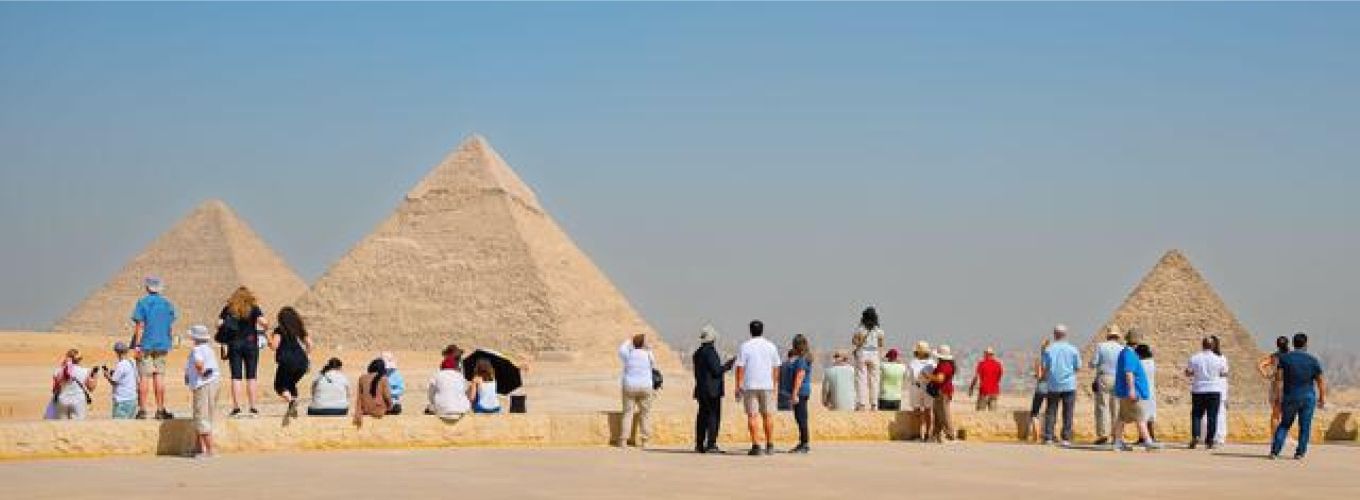
Theme: Ancient Egypt and the world’s most famous pyramid complex
Your first day focuses on the monuments that make Egypt one of the world’s most recognizable historical destinations.
Start with the Pyramids of Giza while the day is relatively cool. Continue to the Great Sphinx and finish at the Grand Egyptian Museum, where artifacts reveal the people, beliefs, and royal traditions behind the monuments.
This order connects the archaeological landscape with the objects recovered from ancient Egyptian tombs and temples.
Suggested Day 1 schedule
| Time | Activity | Suggested duration |
| Early morning | Hotel breakfast and transfer to Giza | 45–90 minutes, depending on location and traffic |
| 8:00–10:00 AM | Explore the Giza pyramid complex | 2 hours |
| 10:00–11:30 AM | Great Sphinx, Valley Temple area, and viewpoints | 1–1.5 hours |
| 11:30 AM–12:30 PM | Lunch and transfer to the museum | 1 hour |
| 12:30–4:00 PM | Grand Egyptian Museum | 3–3.5 hours |
| Late afternoon | Return to hotel and rest | Flexible |
| Evening | Dinner or optional Nile experience | 1.5–2 hours |
These are suggested planning windows, not confirmed attraction reservations. Actual opening times, booked museum entry slots, traffic conditions, and walking pace should determine your final schedule.
1. Explore the Great Pyramids of Giza
The Pyramids of Giza are located on the Giza Plateau, on the western edge of Greater Cairo.
The main monuments were built during Egypt’s Fourth Dynasty, approximately 4,500 years ago, as part of royal funerary complexes.
The three principal pyramids belong to:
- Khufu, also known by the Greek name Cheops
- Khafre, Khufu’s successor and traditionally identified as his son
- Menkaure, a later Fourth Dynasty king
The Great Pyramid of Khufu is the oldest of the Seven Wonders of the Ancient World and the only one that remains substantially standing.
Originally approximately 146.6 meters tall, it was constructed from an enormous quantity of limestone and other stone materials. Its size, orientation, and complex internal design demonstrate the organizational and engineering capabilities of the Old Kingdom.
Seeing the pyramid in person provides a sense of scale that photographs rarely communicate.
What should you see first at Giza?
Prioritize the Great Pyramid of Khufu.
Begin with its exterior, where the enormous limestone blocks provide perspective on how the monument was constructed.
Take time to walk around an accessible portion of the pyramid rather than moving immediately to the next landmark.
You can then continue toward the Pyramid of Khafre.
Although Khafre’s pyramid is slightly smaller than Khufu’s, its position on higher ground can make it appear taller from certain viewpoints.
It also preserves some original outer casing stones near its summit.
Next is the smaller Pyramid of Menkaure, which helps complete the picture of the royal cemetery.
Beyond the three main pyramids, the plateau contains queens’ pyramids, tombs, causeways, and temple remains.
These surrounding structures are important because the pyramids were not isolated monuments. They belonged to larger funerary landscapes associated with royal burial, worship, and the Egyptian concept of the afterlife.
Should you go inside the Great Pyramid?
Entering the Great Pyramid is an optional experience, not an essential part of seeing Giza.
Visitors who purchase the required additional ticket may be able to access its interior passages and chambers, subject to operating conditions.
The experience is physically different from walking through a museum.
Expect steep or narrow passages, enclosed spaces, limited ventilation, and areas where visitors must move carefully.
The interior is notable for its ancient architecture, but it does not contain the decorated wall scenes or extensive artifact displays that some travelers expect.
Entering is worth considering if:
- You are particularly interested in ancient engineering.
- You are comfortable in confined spaces.
- You do not mind steep or restricted passages.
- You want to experience the interior architecture of an ancient pyramid.
Consider skipping it if:
- You experience claustrophobia.
- You have significant mobility limitations.
- You are visiting with very young children.
- You prefer to use the additional time at the museum.
- Heat or physically demanding passages are likely to affect your comfort.
For most first-time visitors with only three days in Egypt, the external monument complex is the priority.
2. Visit the Great Sphinx of Giza
The Great Sphinx of Giza is one of the most recognizable sculptures from ancient Egypt.
Carved primarily from the natural limestone bedrock, the monument represents a reclining lion with a human head.
It is generally associated with Pharaoh Khafre, although aspects of its original function and symbolism continue to be studied.
The lion’s body expresses strength, while the royal head connects the monument to kingship.
The Sphinx is positioned near the valley temple associated with Khafre’s pyramid complex.
This relationship helps explain why visiting the Sphinx immediately after the pyramids is more meaningful than treating it as a separate attraction.
What should you expect at the Sphinx?
The visitor experience focuses on exterior viewing.
You will not ordinarily enter the monument itself.
Designated paths and viewing areas provide opportunities to see the Sphinx with surrounding temples and pyramids in the background.
Allow approximately 30–45 minutes for a focused visit, or more if you enjoy photography and historical interpretation.
A knowledgeable guide can help explain the Sphinx’s construction, changing appearance, restoration history, and symbolic importance.
3. Make time for the panoramic pyramid viewpoints
One of the most memorable experiences at Giza is seeing the pyramids together in the wider desert landscape.
Individual photographs of Khufu’s pyramid communicate its enormous size. Wider views reveal how the royal monuments relate to one another.
The plateau has designated panoramic stops that can help visitors appreciate this relationship.
Not every viewpoint offers an equally clear view of all three principal pyramids, and the best angle depends on the light, visibility, and position of the visitor.
Avoid spending too much of your first morning moving between similar photography locations.
Choose one or two strong viewpoints and reserve enough time for the museum.
Practical advice: Follow the current official visitor circulation system and transport arrangements. Entrances, vehicle access, shuttle routes, and stopping points may differ from older guidebooks.
4. Have lunch before entering the museum
After several hours on the exposed Giza Plateau, lunch provides an important break.
Choose a restaurant or café that keeps the journey toward the Grand Egyptian Museum practical.
An efficient lunch stop should offer:
- Indoor seating or shade
- Reliable hygiene standards
- A clear menu
- Convenient access to onward transportation
- Enough time to rest before several hours of museum walking
Egyptian dishes worth trying include grilled kofta, chicken, rice, molokhia, and a selection of mezze.
Koshari, a popular Egyptian dish combining rice, pasta, lentils, chickpeas, tomato sauce, and fried onions, is another good option.
Avoid turning lunch into a long cross-city journey.
For a short itinerary, location matters almost as much as the restaurant itself.
5. Discover the Grand Egyptian Museum
The Grand Egyptian Museum, commonly abbreviated to GEM, is located in Giza near the pyramid complex.
It provides an extraordinary opportunity to connect the monuments of the ancient Egyptian kings with artifacts representing their civilization.
The museum’s main collections cover major periods of ancient Egyptian history and include royal statues, funerary objects, sculpture, jewelry, and archaeological material.
The Grand Egyptian Museum visitor guide offers additional background on the museum and its collections.
What makes the Grand Egyptian Museum important in 2027?
The museum’s full public opening brought a significant change to sightseeing in Greater Cairo.
Travelers no longer need to treat the museum as a future project or assume that Tutankhamun’s famous treasures are still principally exhibited at the older Egyptian Museum in Tahrir Square.
The GEM now includes dedicated Tutankhamun Galleries and a museum devoted to Khufu’s boats, alongside its principal exhibition spaces.
This makes a visit to Giza particularly rewarding: travelers can examine the royal funerary landscape outdoors, then explore objects associated with ancient Egyptian royalty inside the museum.
The museum also changes how much time visitors should allocate to this part of Cairo.
Trying to visit the pyramids, explore the GEM in depth, and add several distant historical sites on the same day is usually unrealistic.
What should you prioritize inside the museum?
The Grand Hall and monumental sculpture
Begin by appreciating the museum’s architectural scale and monumental displays.
The statue of Ramses II is a prominent feature of the Grand Hall.
Ramses II was a New Kingdom ruler who reigned more than a thousand years after the principal pyramids of Giza were built.
This chronological contrast is valuable.
It shows that the pyramids represent only one major period within Egypt’s much longer ancient history.
The Grand Stairs
The museum’s monumental staircase displays significant statues and architectural objects, providing visitors with an introduction to kingship, sacred architecture, and the changing artistic traditions of ancient Egypt.
Allow time to examine the displays rather than treating the stairs only as a photography location.
The Tutankhamun Galleries
Tutankhamun ruled during the Eighteenth Dynasty of Egypt’s New Kingdom.
His tomb was discovered in the Valley of the Kings in 1922 by a team led by Howard Carter, whose excavation was supported by Lord Carnarvon.
The extraordinary preservation of the tomb’s burial assemblage made Tutankhamun one of the best-known pharaohs in the modern world.
At the GEM, the collection provides insight into royal burial traditions, artistic workmanship, religious symbolism, and the personal objects placed inside an Egyptian royal tomb.
Visitors may recognize the famous golden funerary mask, but the wider collection is equally important for understanding ancient Egyptian craftsmanship and beliefs.
Khufu’s Boats Museum
Khufu’s reconstructed boat is associated with the Great Pyramid complex.
The preserved vessel demonstrates the advanced woodworking techniques of ancient Egyptian craftsmen and helps explain the symbolic role of boats in royal funerary beliefs.
The museum is especially relevant after visiting Khufu’s pyramid earlier in the day.
How long do you need at the Grand Egyptian Museum?
Allow at least three hours for a first visit.
Four hours or more would be preferable for travelers who want to examine extensive collections, read exhibition labels, or spend additional time in the Tutankhamun Galleries.
A visit of less than two hours is possible, but it will require selecting highlights and skipping substantial areas.
| Visitor type | Suggested museum time | Best approach |
| Short-stop traveler | 2 hours | Select major highlights |
| First-time visitor | 3–4 hours | Main galleries and Tutankhamun |
| Ancient history enthusiast | 4–5+ hours | Explore collections more thoroughly |
| Family with young children | 2–3 hours with breaks | Prioritize a few engaging sections |
| Traveler with limited mobility | Flexible | Plan accessible routes and rest stops |
The museum operates timed entry bookings, so your actual visit should be planned around the time shown on your ticket.
As of October 2026, the museum’s published gallery hours are generally 9:00 AM–6:00 PM on Sunday, Monday, Tuesday, Thursday, and Friday, with later opening until 9:00 PM on Wednesday and Saturday. These hours may change before or during 2027, particularly for holidays or special arrangements.
Tickets must be booked online in advance under the museum’s published ticketing policy.
6. Optional evening: Enjoy the Nile or a relaxed dinner
After a full day of archaeological sightseeing, avoid scheduling another demanding attraction.
You have already spent several hours walking at the pyramids and inside the museum.
Depending on your energy and hotel location, consider an evening meal overlooking the Nile or a short felucca ride where available.
A felucca is a traditional sailing boat used along the Nile.
Short evening sails can offer a quieter perspective on Cairo, although the experience depends on wind, local operating arrangements, and river conditions.
This is an optional addition rather than something worth rushing your museum visit to fit in.
Day 1 priority: If the schedule falls behind, protect your time at the Pyramids of Giza and Grand Egyptian Museum. Skip the evening activity first.
Travelers who prefer organized transportation and guided interpretation can consider a private Pyramids of Giza and Grand Egyptian Museum tour.
Day 2: Islamic Cairo, Historic Mosques, and Khan El-Khalili Bazaar
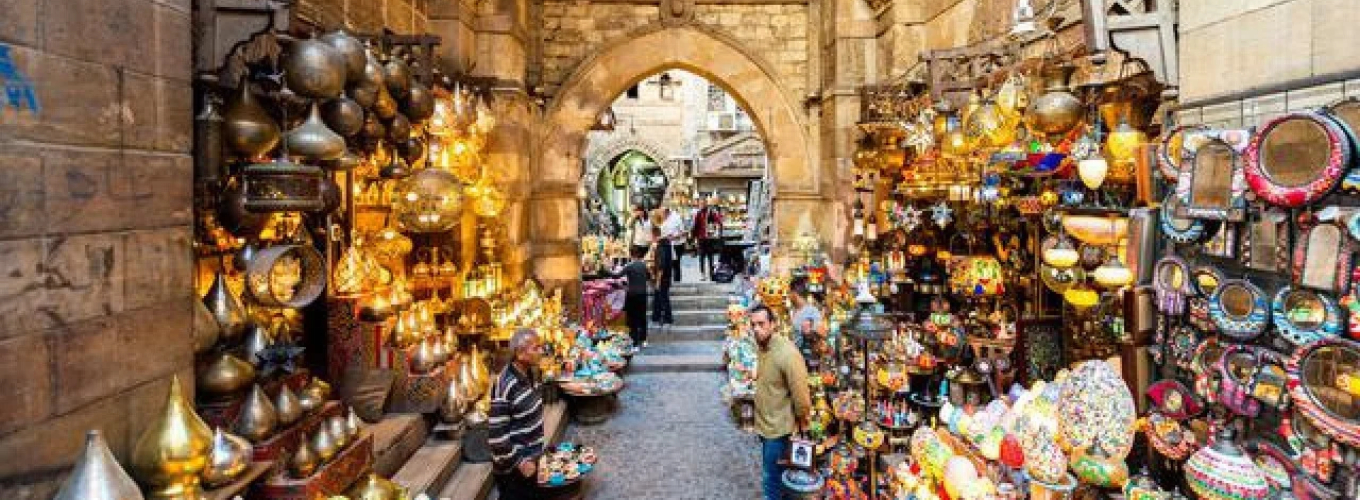
Theme: Medieval Cairo, Islamic architecture, local markets, and Egyptian culture
The second day reveals a very different chapter of Egyptian history.
Instead of royal pyramids and ancient tombs, you will explore historic mosques, fortified buildings, medieval streets, and traditional commercial districts.
Cairo became a major center of political, religious, intellectual, and commercial life during successive Islamic dynasties.
Many of the city’s surviving monuments reflect the Fatimid, Ayyubid, Mamluk, and Ottoman periods.
A day in Islamic Cairo is essential for understanding why Egypt’s cultural history cannot be reduced to its pharaohs.
Suggested Day 2 schedule
| Time | Activity | Suggested duration |
| 8:30–10:30 AM | Saladin Citadel and Mosque of Muhammad Ali | 2 hours |
| 10:30 AM–12:00 PM | Sultan Hassan Mosque area or another nearby monument | 1–1.5 hours |
| 12:00–1:00 PM | Lunch | 1 hour |
| 1:00–3:00 PM | Historic Al-Muizz Street | 2 hours |
| 3:00–5:00 PM | Khan El-Khalili Bazaar and surrounding streets | 2 hours |
| Evening | Dinner or an optional return to the bazaar | Flexible |
This route is an editorial schedule. Mosque visiting arrangements, prayer times, traffic, and attraction opening hours may require adjustments.
1. Start at the Saladin Citadel
The Saladin Citadel and Mosque of Muhammad Ali are among Cairo’s most significant historical attractions.
The Citadel occupies a prominent position on the Muqattam Hills, overlooking the city.
Construction began under the Ayyubid ruler Saladin in the late twelfth century.
Its defensive position helped protect Cairo, and the complex subsequently served as a major seat of government for centuries.
Over time, new rulers added mosques, palaces, military buildings, and administrative structures.
The surviving complex therefore represents several distinct periods rather than the work of a single ruler.
What should you see inside the Citadel?
The Mosque of Muhammad Ali is one of the most recognizable buildings within the complex.
Commissioned during the nineteenth century, its domes and slender minarets form a prominent part of Cairo’s skyline.
The mosque reflects Ottoman architectural influence and the ambitions of Muhammad Ali Pasha, who played a major role in the development of modern Egypt.
Inside, visitors can appreciate its large prayer space, decorative details, and architectural proportions.
The Citadel also contains the older mosque of Sultan al-Nasir Muhammad and other historical buildings.
Not every interior is necessarily open to visitors at all times, so confirm access on the day.
Why is the Citadel worth including?
The Citadel provides a physical explanation of Cairo’s political geography.
Its elevated position gives visitors views across extensive sections of the city.
From here, the contrast between medieval Cairo, modern urban development, and distant monuments becomes easier to understand.
The Citadel is also a good first stop because many travelers prefer to explore its outdoor areas before the hottest part of the day.
Allow approximately two hours for the principal highlights.
2. Discover the Sultan Hassan Mosque
Near the Citadel stands the Mosque-Madrasa of Sultan Hassan, one of the most important examples of Mamluk architecture in Cairo.
Construction began in the fourteenth century under Sultan Hassan.
The building combines religious and educational functions, reflecting the importance of mosques and religious institutions in medieval Egyptian society.
Its monumental entrance, central courtyard, and surrounding iwans create a powerful sense of architectural scale.
An iwan is a vaulted space opening onto a courtyard, a feature found in various traditions of Islamic architecture.
The adjacent Al-Rifa’i Mosque provides an interesting architectural contrast.
Although the two buildings stand near one another, they were constructed in different historical periods.
The Al-Rifa’i Mosque is also associated with members of Egypt’s former royal family and other prominent figures.
If you are especially interested in Islamic architecture, the Sultan Hassan Mosque deserves more than a brief photography stop.
Plan approximately one hour for the immediate area, or longer if you enter multiple monuments.
Dress respectfully and avoid interrupting worshippers.
3. Walk through historic Al-Muizz Street
The Al-Muizz Street historical guide introduces one of the most important surviving streets in medieval Cairo.
The street runs through the historic core of the city and is associated with the early Fatimid development of Cairo.
Today, its monuments represent several centuries of Islamic architectural history.
Visitors encounter ornate facades, minarets, carved wooden details, historic commercial buildings, and religious complexes.
Unlike visiting a single museum, exploring Al-Muizz Street places you within an urban landscape where architecture, commerce, and local activity exist side by side.
What makes Al-Muizz Street special?
The appeal is not simply the number of old buildings.
It is the changing relationship between public streets and historical monuments.
A narrow lane can suddenly open toward a monumental mosque facade.
A historic doorway may sit beside a working shop.
Decorative stonework reveals successive architectural traditions.
In some areas, restored buildings have become major cultural attractions. Elsewhere, the street continues to function as part of ordinary city life.
Useful sites to look for include the Qalawun Complex, historic houses, mosque entrances, and other monuments along the route.
Check individual opening arrangements before planning interior visits, because not every building follows identical ticketing or access rules.
How much walking is involved?
A thorough visit can involve several kilometers of walking, depending on which section you cover and how frequently you enter monuments.
Choose comfortable shoes with good grip.
Some historic streets have uneven surfaces, and the area can become crowded.
For a three-day itinerary, approximately 90 minutes to two hours is a reasonable introduction.
Travelers particularly interested in Islamic architecture could spend much longer here.
4. Explore Khan El-Khalili Bazaar
The Khan El-Khalili Bazaar is one of Cairo’s best-known historic market areas.
Located in Islamic Cairo, it is associated with centuries of commerce and traditional crafts.
Today, the surrounding streets contain souvenir shops, jewelry sellers, textile merchants, perfume shops, cafés, and other businesses.
The experience differs significantly from visiting the pyramids.
You are entering an active commercial district, not a controlled archaeological site.
Expect conversation, movement, competing shop displays, and considerable variation in product quality.
What should you buy at Khan El-Khalili?
Potential purchases include:
- Handmade or locally produced textiles
- Decorative brass and copper items
- Traditional-style lanterns
- Spices and packaged food gifts
- Jewelry
- Small decorative objects
- Egyptian souvenirs
Not everything sold in the market is locally handmade.
Imported and mass-produced goods are also common.
If authenticity matters, ask about the item’s materials, production, and origin before purchasing.
Do not assume a vendor’s description automatically establishes historical authenticity.
Antiques and archaeological objects require particular caution. Never attempt to purchase or export items that may be protected cultural property.
Is bargaining expected?
Negotiating is common in many traditional market shops, although it is not appropriate everywhere.
Some businesses operate with fixed prices.
A practical approach is to ask the price, decide what you are personally willing to pay, and negotiate politely if the situation allows.
Avoid treating bargaining as a competition.
If the price is not suitable, thank the seller and move on.
This is a better approach than arguing over minor amounts or feeling pressured into a purchase.
5. Experience Egyptian food and café culture
Khan El-Khalili and central Cairo provide opportunities to try Egyptian dishes and enjoy a more relaxed evening.
Popular options include:
Koshari: A mixture of rice, pasta, lentils, chickpeas, tomato sauce, and fried onions.
Ful medames: Slowly cooked fava beans, often served with bread and seasonings.
Taameya: Egyptian falafel typically prepared with fava beans.
Mahshi: Vegetables or vine leaves stuffed with seasoned rice.
Kofta: Seasoned minced meat, commonly grilled.
Om Ali: A warm Egyptian dessert made with pastry, milk, and other ingredients.
The choice of restaurant matters more than attempting to fit every traditional food into one meal.
Look for clean preparation areas, reasonable turnover, clear prices, and dishes suited to your dietary needs.
If you have allergies, communicate them explicitly rather than assuming ingredients are obvious.
6. What should you skip on Day 2?
It is tempting to add the Egyptian Museum in Tahrir Square, Cairo Tower, Ibn Tulun Mosque, Al-Azhar Park, and several additional mosques to the same day.
Each is worthwhile, but together they would create unnecessary pressure.
Choose no more than one significant additional attraction beyond the recommended route.
For travelers who prefer archaeology over markets, the Egyptian Museum in Tahrir Square is a reasonable substitute for part of the afternoon.
The older museum remains historically important and contains substantial collections. It is not interchangeable with the Grand Egyptian Museum, and the two institutions have different exhibition experiences.
However, if you have already spent several hours at the GEM on Day 1, you may gain more from exploring Islamic Cairo than from immediately adding another large collection of ancient artifacts.
Day 2 priority: Preserve time for the Citadel, a meaningful walk through Al-Muizz Street, and a relaxed visit to Khan El-Khalili.
Day 3: Coptic Cairo, Royal Mummies, and the Nile
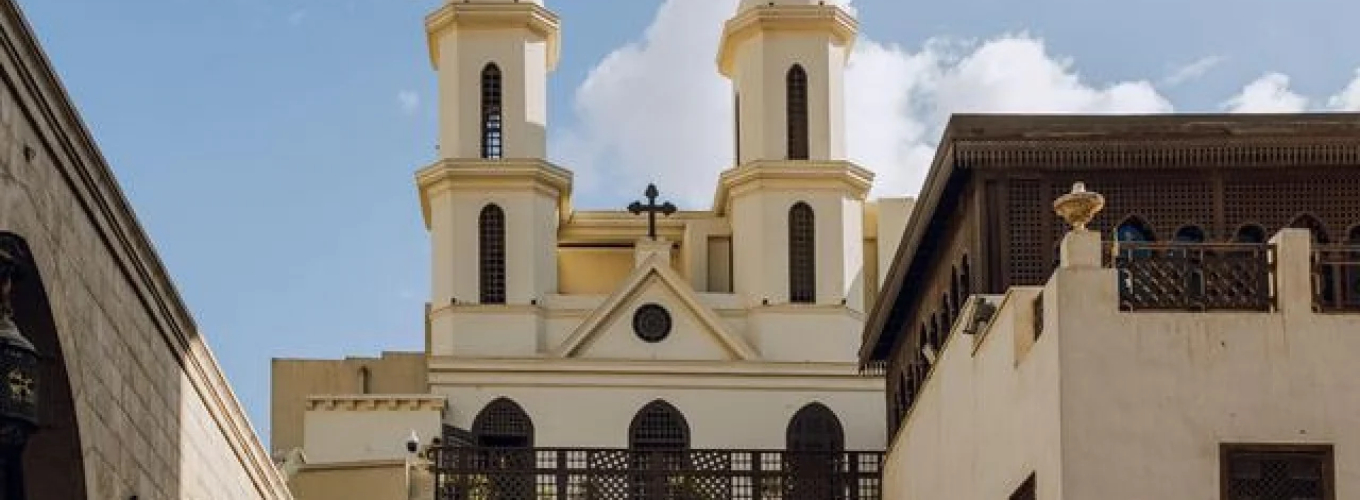
Theme: Egypt’s religious heritage, civilization, and living traditions
Your final day explores the history of Christianity in Egypt and a museum that presents Egyptian civilization across multiple eras.
It is designed to balance Days 1 and 2.
Rather than adding another extensive outdoor archaeological excursion, the route includes churches, historical streets, and indoor museum galleries.
It is particularly suitable for travelers who want to understand the relationship between ancient Egypt and the country’s later cultural development.
Suggested Day 3 schedule
| Time | Activity | Suggested duration |
| 9:00–11:30 AM | Coptic Cairo and Hanging Church | 2–2.5 hours |
| 11:30 AM–12:30 PM | Lunch and transfer | 1 hour |
| 12:30–3:00 PM | National Museum of Egyptian Civilization | 2–2.5 hours |
| 3:00–5:00 PM | Optional Downtown Cairo, Nile, or hotel rest | Flexible |
| Evening | Dinner or airport preparation | Flexible |
If your departure flight is scheduled for the late afternoon, this full schedule will not be suitable. Use the departure-day alternative later in the guide.
1. Begin in Coptic Cairo
Coptic Cairo is a historical district in Old Cairo associated with Egypt’s Christian heritage.
The area includes important churches, religious institutions, and remains associated with the Roman-era fortress of Babylon.
Christianity has a long history in Egypt, and the Coptic Orthodox Church remains an important part of the country’s religious and cultural identity.
Visiting this district helps explain the transition from ancient Egyptian and Roman traditions to the Christian communities that developed in Egypt during late antiquity.
The district is also a useful reminder that religious history in Egypt cannot be understood through a single period or monument.
2. Visit the Hanging Church
The Hanging Church in Cairo is one of Egypt’s best-known historic Christian churches.
Its commonly used name refers to its elevated position above part of the Roman-era Babylon Fortress.
Also known as the Church of the Virgin Mary, it has a long association with Coptic Christian worship and history.
The present building reflects multiple periods of construction, repair, and restoration.
Inside, visitors can appreciate religious icons, decorative woodwork, architectural details, and the church’s continuing religious importance.
What should you know before entering?
The Hanging Church is an active place of worship.
Visitors should:
- Wear respectful clothing.
- Maintain a quiet atmosphere.
- Follow any photography restrictions.
- Avoid interrupting religious services.
- Respect areas restricted to worshippers or church personnel.
The church’s opening arrangements may change during services, religious celebrations, and other events.
For this reason, avoid scheduling it as a tightly timed stop with no flexibility.
3. Explore the nearby religious landmarks
Coptic Cairo contains several sites close enough to explore on foot, depending on access and mobility.
The Church of St. George, the Coptic Museum, and the historic Ben Ezra Synagogue are among the district’s best-known landmarks.
The religious history of the area includes Christian and Jewish communities, and the surrounding district is near important sites associated with Islamic Cairo’s earlier development.
The Ben Ezra Synagogue is particularly notable for its association with the Cairo Geniza, a historically significant collection of Jewish manuscript fragments that has provided scholars with valuable evidence about everyday life, trade, religion, and society across many centuries.
The exact origins and historical traditions associated with individual buildings can be complex.
A good local guide should distinguish between archaeological evidence, documented historical events, and religious traditions.
For visitors with limited time, the Hanging Church and a walk through the historic district provide a good introduction.
Those with a special interest in Coptic art or religious history should consider adding the Coptic Museum.
4. Visit the National Museum of Egyptian Civilization
The National Museum of Egyptian Civilization, abbreviated NMEC, is located in Fustat, Cairo.
Unlike a museum focused primarily on pharaonic antiquities, NMEC presents Egyptian civilization across a broad historical timeline.
Its collections help visitors understand cultural continuity and change from early history into later periods.
One of the museum’s most significant attractions is the Royal Mummies Hall.
Where can you see the royal mummies in Cairo?
The Royal Mummies Hall is located at the National Museum of Egyptian Civilization, not at the Grand Egyptian Museum.
This distinction is particularly important for travelers planning their first visit.
The royal mummies were transferred from the Egyptian Museum in Tahrir Square to NMEC in 2021 during the well-known Royal Mummies Parade.
The collection includes remains of rulers from ancient Egypt, allowing visitors to encounter the physical evidence of royal individuals whose names are associated with major historical events and monuments.
The museum presents the mummies within an exhibition environment designed to support preservation and historical interpretation.
Visitors should approach the display respectfully.
These are human remains, not simply archaeological objects.
Photography regulations may be more restrictive in particular galleries, especially around the mummies.
Why visit NMEC after the Grand Egyptian Museum?
The two institutions serve different educational purposes.
The Grand Egyptian Museum offers extensive collections focused on ancient Egyptian civilization and major archaeological treasures.
NMEC emphasizes a wider story of Egyptian cultural development and includes the Royal Mummies Hall.
Visiting both can therefore be worthwhile without repeating exactly the same experience.
However, travelers who experience museum fatigue may prefer to replace NMEC with a relaxed Nile experience or an additional walk through Cairo.
Allow approximately two to three hours for the museum.
As of October 2026, NMEC generally operates from 9:00 AM to 5:00 PM, with an additional Friday evening session listed in its official visitor information. Recheck operating hours before a 2027 visit.
5. Finish your trip with a Nile experience
If you have enough time before departure, finish your itinerary near the Nile.
The river has shaped Egyptian settlement, transportation, agriculture, and civilization for thousands of years.
Ancient Egypt developed along the Nile Valley and Delta, where the river provided water, fertile floodplain land, and a major transport corridor.
In modern Cairo, the Nile remains a central feature of the urban landscape.
A riverside meal or short felucca ride offers a different experience from archaeological sightseeing.
It also provides an appropriate conclusion to a three-day trip that has moved from ancient royal monuments to medieval neighborhoods and modern Egyptian life.
Do not schedule a river cruise or long dinner if it creates pressure around your flight departure.
Day 3 priority: See Coptic Cairo and one major museum or cultural experience. Keep the final afternoon flexible if traveling the same day.
Alternative 3-Day Egypt Itineraries: Which Route Should You Choose?
The standard Cairo itinerary is not the only reasonable way to spend three days in Egypt.
The best alternative depends on your arrival airport, interests, available sightseeing time, and willingness to travel between cities.
Before choosing an itinerary, decide which experience matters most.
| Itinerary | Best for | Main advantage | Main limitation |
| Cairo and Giza | First-time visitors | Greatest variety without domestic flights | No Luxor or Aswan |
| Cairo, Giza, and Saqqara | Ancient history enthusiasts | More pyramids and archaeological context | Less time for living culture |
| Cairo and Luxor | Travelers prioritizing pharaonic sites | Pyramids plus New Kingdom temples and tombs | Airport transfers reduce sightseeing time |
| Cairo and Alexandria | History and coastal-city interests | Contrasting inland and Mediterranean experiences | A substantial intercity journey |
| Cairo with a relaxed third day | Families and slower-paced travelers | Less physical strain | Fewer attractions |
Option 1: Three days focused on pyramids and ancient history
This version is suitable for travelers who want to spend most of their time examining ancient Egyptian monuments.
Day 1: Giza Pyramids, Great Sphinx, and Grand Egyptian Museum.
Day 2: Saqqara, Memphis, and possibly Dahshur.
Day 3: National Museum of Egyptian Civilization, Egyptian Museum in Tahrir Square, and a short visit to Old Cairo.
The major difference is Day 2.
Instead of exploring Islamic Cairo, you will travel south of Giza to sites associated with the development of pyramid construction.
Why is Saqqara important?
Saqqara was a major burial ground associated with the ancient city of Memphis.
Its most famous monument is the Step Pyramid of Djoser, built during Egypt’s Third Dynasty.
The monument is strongly associated with Imhotep and represents a major development in the history of monumental stone architecture.
Unlike the later smooth-sided pyramids at Giza, Djoser’s pyramid has a stepped exterior.
This makes Saqqara particularly valuable for understanding how Egyptian pyramid architecture evolved.
The Pyramid of Djoser is not simply another pyramid to add to a checklist. Its design illustrates an important stage in the development of Egyptian royal funerary monuments.
At Saqqara, visitors can also encounter decorated tombs, other pyramid complexes, and evidence of the long history of the necropolis.
Dahshur, farther south, contains the Bent Pyramid and Red Pyramid, both associated with Pharaoh Sneferu.
The change in the Bent Pyramid’s exterior angle and the development of the Red Pyramid help explain the engineering progression that preceded Khufu’s Great Pyramid.
This makes the sequence of Dahshur, Saqqara, and Giza historically compelling.
However, attempting to examine all three areas thoroughly in one day can be demanding.
For a focused excursion, prioritize Saqqara and add one other site if time permits.
A Saqqara, Memphis, and Dahshur excursion offers an organized route through these archaeological areas.
Who should choose this itinerary? Travelers fascinated by pyramid construction, Old Kingdom history, ancient tombs, and archaeology.
Who should avoid it? Visitors who want an introduction to contemporary Cairo and its later religious and cultural heritage.
Option 2: Three days in Egypt with Cairo and Luxor
Combining Cairo and Luxor in three days is possible, but it requires careful flight planning.
Luxor is located in Upper Egypt, considerably south of Cairo.
It contains archaeological landmarks associated primarily with the New Kingdom, including the Valley of the Kings and major temple complexes.
An efficient version of this itinerary could look like:
Day 1 — Cairo: Giza Pyramids, Great Sphinx, and selected highlights of the Grand Egyptian Museum.
Day 2 — Luxor: Early flight from Cairo, Karnak Temple, and Luxor Temple.
Day 3 — Luxor: Valley of the Kings, Hatshepsut Temple, and the Colossi of Memnon, followed by departure or onward travel.
This itinerary works best when a domestic flight schedule allows you to move south without losing most of a sightseeing day.
Is one day enough for Luxor?
One full day can introduce Luxor’s most important attractions, but it will not be comprehensive.
Luxor’s archaeological sites are divided between the East Bank and West Bank of the Nile.
On the East Bank, Karnak Temple is an enormous religious complex associated with the worship of Amun and other deities.
The Karnak Temple complex contains monumental pylons, courtyards, obelisks, and the famous Great Hypostyle Hall.
On the West Bank, the Valley of the Kings contains royal tombs cut into the desert landscape.
The Valley of the Kings became an important burial ground for New Kingdom pharaohs, including Tutankhamun.
Nearby, the mortuary temple of Hatshepsut at Deir el-Bahari provides one of Egypt’s most distinctive examples of ancient temple architecture.
A single day will require prioritization.
It is usually better to examine two or three major attractions carefully than to spend the day repeatedly entering and exiting a vehicle.
What about flying from Cairo to Luxor?
A nonstop domestic flight typically takes around one hour in the air, but that is not the total travel time.
You must also allow for:
- The journey to Cairo’s airport
- Domestic check-in and security
- Boarding
- The flight itself
- Arrival procedures and baggage collection
- Transfer from Luxor Airport
- Potential delays or schedule changes
Even with a short flight, the overall movement can consume several hours.
For an international visitor with only three days, this is a significant consideration.
The return journey may involve another domestic flight, or an international departure routing from Luxor where suitable flights are available.
Do not assume that separate domestic and international tickets will protect you if one flight is delayed.
Travelers interested in this faster route can review the 4 Days Cairo and Luxor Tour, which provides a more practical amount of time for two cities.
Recommendation: Choose Cairo and Luxor in three days only when your main objective is ancient Egyptian archaeology and your flight timings make the route practical.
Option 3: Three days with a Cairo-to-Alexandria excursion
Alexandria is located on Egypt’s Mediterranean coast, north of Cairo.
Founded by Alexander the Great in 331 BC, the city became an important center of the Hellenistic world and later part of Roman Egypt.
A three-day itinerary combining Cairo and Alexandria could include:
- Day 1: Pyramids of Giza and Grand Egyptian Museum
- Day 2: Alexandria day trip
- Day 3: Historic Cairo
Alexandria’s attractions include the Catacombs of Kom El-Shoqafa, the Citadel of Qaitbay, the site known as Pompey’s Pillar, and the modern Bibliotheca Alexandrina.
The coastal setting creates a striking contrast with Greater Cairo.
However, Alexandria is not a convenient short diversion.
The drive from Cairo commonly takes several hours each way, depending on your starting point and road conditions.
A return day trip can become tiring, especially after an intensive day at Giza.
If Alexandria is a major priority, consider giving the city an overnight stay rather than treating it as a brief stop.
Option 4: A relaxed three-day Egypt itinerary
Not everyone wants to visit archaeological sites from morning until late afternoon.
Some travelers prefer fewer attractions, more comfortable meals, and additional opportunities to experience Cairo without a rigid timetable.
A slower itinerary might be:
Day 1: Pyramids of Giza and Great Sphinx, followed by a relaxed dinner.
Day 2: Grand Egyptian Museum and a Nile-side evening.
Day 3: Coptic Cairo or Islamic Cairo, depending on personal interests.
This version is particularly suitable for travelers who:
- Are recovering from long-haul travel
- Have limited mobility
- Are visiting with younger children
- Prefer cultural experiences over packed sightseeing
- Want more time for photography
- Would rather return to a hotel during the afternoon
There is no requirement to fill every hour of a trip to make it worthwhile.
For many visitors, spending longer at fewer major sites leads to a more satisfying experience.
What If You Only Have 72 Hours in Egypt?
A 72-hour trip is not necessarily the same as three full days of sightseeing.
For example, a visitor arriving in Cairo at 3:00 PM on Friday and departing at 3:00 PM on Monday has a 72-hour stay but only two unrestricted sightseeing days.
Your arrival and departure times should determine the itinerary.
Scenario 1: Arriving in Cairo in the morning
If your flight lands early and you have sufficient energy, the first afternoon could include a lighter attraction.
Consider the Egyptian Museum in Tahrir Square, a short Nile experience, or a relaxed walk through a central neighborhood.
Save the Pyramids of Giza for the following morning.
This allows you to start the more demanding outdoor sightseeing when you are rested.
Scenario 2: Arriving in Cairo in the evening
Use the evening for airport transfer, hotel check-in, and dinner.
Avoid booking nonrefundable activities immediately after an international arrival.
Flight delays, immigration processing, baggage collection, and traffic may affect the schedule.
Start Day 1 the following morning.
Scenario 3: Departing Egypt on Day 3
If your international flight leaves on the third calendar day, prioritize sightseeing differently.
| Available departure-day time | Suggested plan |
| Morning departure | No sightseeing; transfer to airport |
| Early afternoon departure | Breakfast and airport transfer |
| Evening departure | One short attraction near your hotel or airport route |
| Late-night departure | A limited half-day visit may be possible |
For an evening departure, the Egyptian Museum in Tahrir Square or a relaxed central Cairo activity may be more practical than a distant archaeological excursion.
However, the decision depends on the specific airport, terminal, check-in requirements, traffic, and luggage arrangements.
Always calculate the airport transfer backward from the airline’s required check-in time.
The three-day priority rule
If your available time becomes shorter than expected, prioritize in this order:
- Pyramids of Giza and Great Sphinx
- Grand Egyptian Museum
- One historical neighborhood: Islamic Cairo or Coptic Cairo
- A second museum or additional historical area
- Optional Nile activities and shopping
This order protects the most distinctive experiences while allowing the itinerary to remain flexible.
It is more useful than attempting to compress all three days into a single exhausting schedule.
Where Should You Stay for 3 Days in Egypt?
For the recommended itinerary, choose one hotel base in Cairo or Giza rather than changing accommodation between neighborhoods.
Hotel location affects the journey to every major attraction.
A room with a famous view may be appealing, but convenience, room quality, and access to reliable transportation also matter.
Giza: Best for travelers prioritizing the pyramids
Giza is a practical base if the Pyramids of Giza and Grand Egyptian Museum are your main priorities.
Advantages include:
- Convenient access to the Giza archaeological area
- More opportunities to stay near pyramid viewpoints
- Potentially shorter transfers on the first sightseeing day
- A range of accommodation categories
However, Giza is a large and varied area.
Not every hotel advertised as being in Giza is close to the pyramids.
A hotel may also be inconvenient for visiting Islamic Cairo, Coptic Cairo, or Downtown.
Check the specific property location rather than relying only on the district name.
Downtown Cairo: Best for central sightseeing
Downtown Cairo is useful for travelers who want access to Tahrir Square, the Nile, restaurants, and public transportation.
It is a practical starting point for visiting the Egyptian Museum and exploring parts of central Cairo.
Hotels range from older historic properties to modern accommodation.
The major consideration is traffic and street noise.
Some central locations are lively late into the evening.
Check recent guest feedback on room soundproofing and access before booking.
Zamalek: Best for a quieter urban base
Zamalek occupies part of Gezira Island in the Nile.
It is known for residential streets, restaurants, cafés, and cultural establishments.
Travelers may find it a comfortable base for dining after sightseeing.
However, staying in Zamalek does not eliminate the need for road transfers to the pyramids, the Citadel, or Coptic Cairo.
Bridge traffic can influence travel times.
Garden City: Best for Nile-side and central-city access
Garden City is a central Cairo neighborhood near the Nile and Downtown.
Its location can be convenient for travelers who want a central hotel base without staying directly in the busiest commercial streets.
Hotel quality and transport convenience vary by property.
How to choose the best hotel location
| Area | Best suited to | Main trade-off |
| Giza | Pyramid-focused sightseeing | Longer journeys to parts of eastern Cairo |
| Downtown Cairo | City exploration and transport connections | Traffic and street noise |
| Zamalek | Restaurants and a more residential setting | Bridge crossings and transfers |
| Garden City | Central access and Nile-side stays | Property-specific cost and availability |
For a first visit, choose the best-quality accommodation you can comfortably afford in a location that supports your main sightseeing priorities.
If you have just three days, do not sacrifice several hours of your visit for a hotel that looks geographically convenient on a map but has poor access to your planned route.
How to Get Around Cairo During a 3-Day Itinerary
Transportation planning is one of the most important parts of a short trip to Cairo.
The city covers a large metropolitan area, and travel times are affected by road conditions, time of day, and the distance between historic neighborhoods.
A geographically efficient itinerary can save considerable time compared with repeatedly crossing the city.
Private driver and guide
A private vehicle with a professional driver is one of the most convenient choices for travelers following a packed sightseeing schedule.
Advantages include:
- Hotel pickup and drop-off
- Less time arranging transportation between attractions
- Flexibility for breaks
- Convenient luggage arrangements when agreed in advance
- Easier coordination between distant attractions
A licensed Egyptologist guide adds a different benefit: historical interpretation.
At the pyramids, a qualified guide can explain royal burial architecture, the relationship between the monuments, and the archaeological context.
At the museum, an experienced guide can help visitors understand the historical significance of selected objects.
A guide and driver may be separate individuals, so confirm the arrangement when booking.
A private tour does not automatically include attraction tickets, meals, or all transport expenses.
Ask for a clear written list of inclusions and exclusions.
Ride-hailing applications
App-based rides are a practical option for many journeys across Cairo.
They can be especially useful for traveling between hotels, restaurants, and individual attractions.
Benefits can include visible fare estimates and trip information within the application.
However, pickup arrangements at airports, major attractions, and heavily congested streets may require additional coordination.
Allow extra time for locating your driver.
Verify the vehicle and driver details displayed in your application before entering the car.
Cairo Metro
The Cairo Metro can be useful for selected journeys, particularly around Downtown and Coptic Cairo.
For example, the Mar Girgis station on Line 1 provides access to the historic Coptic Cairo district.
The Sadat station serves the Tahrir Square area and is connected to multiple metro lines.
Metro travel can avoid some road congestion, but it will not take you directly to every tourist attraction.
You may still need to walk or use road transport for the final part of the journey.
Be aware that stations can become crowded, especially during commuting periods.
Traditional taxis
Taxis remain an option throughout Greater Cairo.
When using a taxi outside an application, confirm how the fare will be calculated before beginning the journey.
Use clearly identifiable, legitimate transportation services.
If you are unsure, ask your hotel to arrange transport.
Which transportation method is best?
| Transport method | Best use | Main advantage | Main limitation |
| Private driver | Full sightseeing days | Convenience and flexibility | Higher overall cost |
| Ride-hailing | Individual city transfers | App-based trip management | Pickup delays and traffic |
| Cairo Metro | Selected central routes | Avoids some road congestion | Limited coverage for major sights |
| Hotel-arranged transfers | Airport journeys | Prearranged collection | Price varies by provider |
| Walking | Historic neighborhoods | Close-up cultural experience | Heat, uneven surfaces, and distances |
For the recommended three-day route, a private driver or a combination of prearranged transport and short walks is usually the simplest approach.
How Much Does a 3-Day Egypt Itinerary Cost in 2027?
The cost of spending three days in Egypt depends on accommodation, travel dates, attraction tickets, transport, meals, and the level of guiding you choose.
A single fixed price would be misleading.
A budget traveler using public transport and simple accommodation will have different expenses from a couple booking a private Egyptologist guide, a premium hotel, and private transfers.
For a useful estimate, calculate the major categories separately.
Main expenses to include
| Expense | What determines the cost | Planning advice |
| Accommodation | Hotel location, category, dates, and room occupancy | Compare the total stay price, including taxes |
| Pyramids entry | Visitor nationality, ticket category, optional interiors | Budget separately for additional pyramid access |
| Grand Egyptian Museum | Nationality, age category, experience, and booking date | Check the live official ticket price |
| Other attractions | Number of sites and ticket categories | Avoid paying for museums you cannot reasonably visit |
| Airport transfer | Airport, hotel distance, and vehicle | Request a written or in-app quote |
| Local transport | Number of journeys and travel style | Group geographically nearby attractions |
| Guide | Duration, language, and private/group format | Confirm licensing and inclusions |
| Meals | Restaurant style and drinks | Leave room for unplanned stops |
| Optional experiences | Nile activities and specialized visits | Treat these as extras, not essentials |
Current official attraction fees as a planning reference
The following are published foreign-adult admission fees checked in October 2026. They are not confirmed 2027 prices and should be rechecked before travel.
| Attraction | Published adult foreign-visitor fee | Important note |
| Giza Plateau | EGP 700 | Main site admission; pyramid interiors extra |
| Saladin Citadel | EGP 550 | Main area entry |
| Saqqara archaeological area | EGP 600 | Additional tombs and interiors may cost extra |
| Egyptian Museum, Tahrir Square | EGP 550 | General museum admission |
| Grand Egyptian Museum | Check current booking price | Varies by ticket category and selected experience |
| National Museum of Egyptian Civilization | Check current ticket price | Confirm applicable admission category |
These published figures give a useful starting point without assuming future prices.
For example, the basic Giza Plateau and Citadel admissions currently amount to EGP 1,250 for one foreign adult, before the Grand Egyptian Museum, other attractions, transportation, food, or accommodation.
That figure should not be treated as the total cost of the itinerary.
How to calculate a realistic budget
Use this method:
Total trip budget = accommodation + attraction tickets + transport + guiding + meals + optional activities + contingency.
Suppose two travelers are sharing one hotel room and booking a private guide.
Their budget should separate shared expenses from per-person expenses.
Accommodation and private-vehicle costs are often shared.
Museum tickets and many meals are usually priced per person.
That distinction matters when comparing a solo trip with a trip for two or four travelers.
It is also important to check whether a quoted tour price includes:
- Airport pickup
- Accommodation
- Daily breakfast
- An Egyptologist guide
- Attraction entry tickets
- Grand Egyptian Museum admission
- Additional pyramid-interior tickets
- Lunch
- Bottled water
- Tips
- Taxes or booking charges
A cheaper package is not necessarily better value if it excludes major expenses.
Is Egypt expensive for a three-day visit?
Egypt can offer different spending levels, but a short visit is not automatically inexpensive.
International flights may represent a significant proportion of the total cost, especially when traveling from North America or Australia.
A short itinerary may also encourage travelers to choose private transportation to maximize sightseeing time.
The best way to control the budget is not simply to select the cheapest accommodation or tour.
It is to avoid unnecessary journeys, duplicate attractions, poorly timed transfers, and extras that do not improve your experience.
For a short trip, efficiency can be more valuable than adding another stop.
Best Time to Visit Egypt for a 3-Day Itinerary in 2027
For an itinerary focused on Cairo and Giza, October through April generally offers more comfortable conditions for outdoor sightseeing than the hottest summer months.
However, every season has advantages.
A traveler interested in quiet museum visits may choose different dates from someone prioritizing photography, warm evenings, or lower accommodation costs.
October to November: Comfortable sightseeing conditions
Autumn is an appealing period for visiting Cairo.
Temperatures generally become more manageable after the summer heat, making outdoor visits to the pyramids and historic streets more comfortable.
This is a good season for combining archaeological sites with walking tours.
However, popular attractions can still be busy.
Book accommodation and museum admission in advance when traveling during periods of high demand.
December to February: Cooler weather and winter travel
Winter is often one of the most comfortable seasons for extended outdoor sightseeing.
Mornings and evenings can feel surprisingly cool, particularly for visitors expecting consistently hot weather.
A light jacket or additional layer is useful.
Winter also coincides with Christmas and New Year travel periods, which may affect hotel availability and pricing.
Cairo can experience hazy conditions, and clear pyramid views are not guaranteed every day.
Check the best time to visit Egypt when comparing travel dates.
March to April: Spring sightseeing
Spring can offer pleasant conditions, although temperatures and wind vary.
Dusty weather and occasional sand-bearing winds can reduce visibility.
This is important for travelers hoping to photograph the pyramids against a clear sky.
Do not assume every spring day will have ideal outdoor conditions.
Build some flexibility into your schedule, especially if photography is a major priority.
May to September: Hot-weather planning
Summer is generally the most demanding season for outdoor archaeological visits in Cairo and Giza.
Exposed stone surfaces, limited shade, and long periods of walking can make the pyramids particularly tiring.
Visitors traveling during hotter months should:
- Begin outdoor activities as early as official opening times permit.
- Carry sufficient drinking water.
- Wear breathable clothing and sun protection.
- Use shaded resting areas.
- Reserve indoor museum visits for hotter periods of the day where practical.
- Avoid adding several outdoor archaeological sites to the same afternoon.
The Grand Egyptian Museum becomes particularly useful during this season because it provides a substantial indoor cultural experience.
Seasonal comparison
| Season | Outdoor sightseeing | Main consideration | Suggested approach |
| Winter: December–February | Generally comfortable | Cool mornings, holiday demand | Flexible full-day sightseeing |
| Spring: March–April | Often pleasant | Wind and occasional dust | Outdoor mornings with backup plans |
| Summer: May–September | Hotter and more demanding | Heat and sun exposure | Early outdoor visits and indoor afternoons |
| Autumn: October–November | Generally comfortable | Popular travel period | Book important entries early |
For monthly conditions, the Egypt weather guide provides additional context.
What about Ramadan in 2027?
Ramadan is expected to fall approximately during February and early March in 2027, although the exact start and end depend on the official lunar-calendar determination.
Ramadan can be a culturally interesting time to visit Cairo.
After sunset, some streets and restaurants become particularly lively as people gather for iftar, the meal that breaks the daily fast.
However, there are practical considerations.
Some restaurants may change their daytime service arrangements. Attraction hours, local transport patterns, and cultural activities may also differ from their usual schedules.
Visitors should avoid assuming that standard published hours apply unchanged during Ramadan.
Plan respectfully around prayer times, religious practices, and local conditions.
Essential Travel Tips for Visiting Egypt in 2027
A successful three-day itinerary depends on more than selecting attractions.
Entry documentation, mobile connectivity, transportation, ticket reservations, and realistic daily pacing can all affect how much you enjoy the trip.
Check your passport and visa requirements
Most international visitors need to check Egypt’s visa rules before arrival.
Eligibility depends on nationality, passport type, purpose of visit, and point of entry.
Travelers holding passports from the United States, United Kingdom, Canada, Australia, and many European countries have access to tourist visa arrangements, but the exact rules should be checked for each passport.
Egypt operates an official electronic visa system for eligible nationalities.
As of October 2026, the official e-visa information lists a single-entry tourist visa fee of US$30 and a multiple-entry tourist visa fee of US$65.
Those figures are subject to change and should not be treated as guaranteed 2027 fees.
Passport validity is another important requirement.
Egypt’s published tourist entry guidance generally requires passports to remain valid for at least six months from the arrival date.
Check the current requirements through the Egyptian government’s e-visa service or the Egyptian diplomatic mission responsible for your nationality.
Do not rely on an informal visa website simply because it appears prominently in search results.
Which airport should you use?
For the recommended itinerary, Cairo International Airport is a common arrival choice.
It provides access to central Cairo and connections to other Egyptian cities.
Sphinx International Airport is another possibility, particularly for travelers whose flights operate there and whose plans focus on Giza.
The best airport depends on:
- Available international flights
- Airline schedules
- Your hotel location
- Arrival and departure times
- Ground-transfer arrangements
- Any onward domestic flight
Do not assume that the airport geographically closest to the pyramids always provides the most convenient journey.
Flight availability and hotel transfer logistics may be more important than straight-line distance.
Book the Grand Egyptian Museum before traveling
The Grand Egyptian Museum requires advance online booking under its current ticketing arrangements.
Visitors select an entry time during the reservation process.
Book the museum before making tightly scheduled lunch or sightseeing arrangements for Day 1.
Be aware that a timed entry window does not mean you must leave the museum after a fixed two-hour visit.
The ticket’s selected entry time determines when you should arrive; your visit duration is governed by the museum’s operating hours and applicable rules.
For 2027 travel, check:
- The selected date
- Entry time
- Visitor nationality category
- Age or student eligibility
- Admission inclusions
- Rules on changes and refunds
- Any temporary closures or special events
Use the museum’s official booking service rather than relying on outdated screenshots of prices or hours.
Can you buy tickets at the pyramids?
The Giza Plateau has official ticketing arrangements, but these should be checked shortly before visiting.
The main area ticket and entry to individual pyramid interiors are different products.
Buying a Giza Plateau ticket does not automatically entitle you to enter the Great Pyramid.
Likewise, a Grand Egyptian Museum ticket does not automatically include admission to the Giza archaeological area.
Treat these as separate attractions when calculating your budget.
The official Ministry of Tourism and Antiquities listing and the authorized Egyptian monument-ticketing system are appropriate places to verify current admission arrangements.
Prepare for weather and walking
Even a geographically efficient Cairo itinerary involves substantial walking.
A typical sightseeing day may include paved museum areas, exposed archaeological terrain, steps, uneven surfaces, and crowded historic streets.
Bring:
- Comfortable walking shoes
- A sun hat
- Sunglasses
- Sunscreen
- A refillable water bottle
- A lightweight outer layer in cooler months
- A small day bag
- A charged phone and power bank
- Copies of important booking confirmations
- Any essential personal medication
Choose footwear for comfort and support rather than appearance.
Sandals may be suitable for casual evenings, but they are not always ideal for long days on uneven ground.
What should you wear in Cairo?
Cairo does not require visitors to wear traditional Egyptian clothing.
For most sightseeing, lightweight and modestly styled clothing is practical.
At mosques and churches, more conservative dress may be expected.
Covering shoulders and knees is a sensible general approach, although individual religious sites may have additional requirements.
Women may be asked to cover their hair in certain mosque areas.
Carry a lightweight scarf if you expect to visit religious buildings.
For additional comfort in summer, choose breathable fabrics rather than heavy clothing.
Money, cash, and card payments
The Egyptian pound is Egypt’s national currency.
Many hotels, established restaurants, and major tourist services accept card payments, but visitors should not assume every shop, small restaurant, or local service does.
Carry some Egyptian-pound cash for smaller purchases.
Major attraction ticketing procedures increasingly involve formal digital systems, and accepted payment methods can differ by site.
Confirm whether cash or card payment is required before visiting.
Avoid carrying an unnecessarily large amount of cash during crowded market visits.
Mobile internet and communication
Mobile internet is useful for navigation, ride-hailing, translations, and contacting your hotel.
International travelers can investigate roaming plans, a local SIM card, or an eSIM compatible with their phone.
Before purchasing an eSIM, check whether your device supports it.
Download your hotel address and essential booking information before leaving the airport.
Keep a saved version of your itinerary that can be accessed without mobile data.
Staying safe during a short visit
Most common tourist precautions are relevant in Cairo.
Use reputable transportation, remain aware of personal belongings, and be cautious about unsolicited services.
At major visitor attractions, you may encounter people offering guiding, photography assistance, camel rides, transportation, or souvenirs.
Ask for the full price and conditions before accepting any paid service.
Do not assume that a service is complimentary because someone initially describes it as help.
Travel advisories can vary by nationality and region. Review the latest advice issued by your own government, especially if your plans include areas outside the main Cairo and Giza tourist routes.
For a broader discussion aimed at US visitors, the Egypt safety guide for Americans provides additional travel-planning context.
How to Adapt Your 3-Day Itinerary to Your Travel Style
The same route will not suit every traveler equally.
Adjusting the plan for your interests and physical requirements can make a short trip substantially more enjoyable.
Families visiting Egypt with children
Children may enjoy the Pyramids of Giza, especially when a guide explains how ancient Egyptians constructed and used the monuments.
However, younger children can become tired after several hours of standing, walking, and visiting museum galleries.
For families, it is usually better to:
- Start outdoor sightseeing early.
- Schedule regular food and water breaks.
- Keep museum visits focused.
- Avoid long periods in pyramid passages.
- Use comfortable transportation between attractions.
- Leave part of the afternoon unscheduled.
For Day 3, you could choose a shorter visit to Coptic Cairo and spend the afternoon relaxing rather than adding another long museum experience.
The Egypt with kids travel guide offers additional family-focused considerations.
Couples visiting Egypt for three days
Couples may prefer combining archaeological attractions with comfortable dinners and river experiences.
A balanced itinerary could include:
- Day 1: Giza and the Grand Egyptian Museum
- Day 2: Islamic Cairo and a traditional Egyptian dinner
- Day 3: Coptic Cairo and a relaxed Nile experience
Do not schedule romantic dinners or special experiences so tightly that traffic delays become stressful.
For a special occasion, choose one evening experience worth prioritizing rather than booking several competing activities.
Solo travelers
Solo travelers can explore Cairo independently, but it is important to plan transportation and attraction logistics carefully.
Ride-hailing applications and the Cairo Metro can be useful for selected journeys.
A professional guide may be especially worthwhile at the pyramids or in historically complex neighborhoods.
Solo travelers should confirm the exact location of their accommodation and arrange airport pickup when appropriate.
Share your general plans with someone you trust, keep valuables secure, and avoid depending on unfamiliar transport arrangements late at night.
Older travelers and visitors with mobility limitations
Cairo has accessible modern facilities, but accessibility differs significantly between attractions.
The Grand Egyptian Museum offers a modern museum environment, while archaeological sites and historic neighborhoods can present more substantial challenges.
Potential difficulties include:
- Uneven ground
- Steps
- Long distances between attractions
- Limited shade
- Crowded streets
- Narrow historic passages
- Restricted pyramid interiors
Visitors should not assume that a general description such as wheelchair accessible applies equally to every part of a large attraction.
Confirm the exact route, available assistance, entrances, elevators, and transport arrangements with the attraction or tour operator.
For travelers with mobility limitations, it may be preferable to split Giza and the Grand Egyptian Museum across two different days.
A private itinerary can also incorporate additional rest breaks and minimize unnecessary walking.
Photography enthusiasts
Photography can be a major reason to visit Egypt.
However, trying to photograph every monument from every viewpoint can reduce the time available for understanding what you are seeing.
For a three-day photography-focused itinerary:
- Prioritize the pyramids in favorable morning light.
- Allow extra time at one panoramic Giza viewpoint.
- Use permitted photography areas in the Grand Egyptian Museum.
- Explore the architectural details of Islamic Cairo.
- Consider an evening Nile scene if weather permits.
Photography restrictions vary between archaeological sites, museums, and religious buildings.
Drones and commercial photography generally require separate permissions, and certain equipment may be prohibited.
Check the current regulations before bringing specialized equipment.
Common Mistakes to Avoid on a 3-Day Egypt Trip
1. Trying to see Cairo, Luxor, Aswan, and Alexandria
These places are geographically separate and deserve substantial sightseeing time.
Attempting all of them in three days makes the trip revolve around airports and vehicles.
Choose one primary region unless your itinerary has a specific reason to include a second city.
2. Treating arrival day as a full sightseeing day
International arrival times are not the same as hotel departure times.
Immigration, luggage, transportation, and check-in can consume a meaningful part of the day.
Leave time for unexpected delays.
3. Underestimating the Grand Egyptian Museum
The museum contains extensive collections and multiple exhibition areas.
It deserves more than a brief stop between unrelated attractions.
Reserve enough time to appreciate the objects rather than simply photographing the most famous displays.
4. Buying the wrong attraction ticket
The Giza Plateau, individual pyramid interiors, and Grand Egyptian Museum have separate entry arrangements.
Check precisely what your ticket includes.
Do not assume a combined ticket exists unless it is explicitly offered by an authorized provider.
5. Following an outdated visitor entrance
Major sites may update their entrance arrangements and internal circulation.
Giza’s visitor infrastructure has changed significantly in recent years.
Check the currently designated entrance and transport rules before leaving your hotel.
6. Scheduling too many museums
Cairo has several outstanding museums.
However, spending all three days indoors may prevent you from experiencing the city’s streets, architecture, and everyday culture.
Choose museums according to what they uniquely offer.
7. Ignoring the distance between attractions
A journey may appear short on a map while taking much longer in traffic.
Group attractions geographically whenever possible.
This is one of the most effective ways to protect your limited sightseeing time.
8. Forgetting to account for heat
The Giza Plateau is highly exposed to sunlight.
Summer sightseeing can be physically demanding.
Carry water, rest when necessary, and do not schedule extensive outdoor walking during the hottest hours if it can be avoided.
9. Spending too long shopping
Khan El-Khalili can be interesting, but an unplanned shopping session may take time away from other activities.
Decide whether shopping is one of your main goals or simply an optional cultural experience.
10. Booking a tour without checking inclusions
A three-day package may or may not include hotels, airport transfers, admission tickets, meals, and private guiding.
Request a clear description before paying.
Compare itineraries based on actual experiences and total costs, not only advertised starting prices.
Frequently Asked Questions About Spending 3 Days in Egypt
Can you see the Pyramids of Giza in a three-day Egypt itinerary?
Yes. The Pyramids of Giza can be visited during a three-day Egypt itinerary, and they should generally be a priority for first-time travelers. Allow approximately three to four hours for the main pyramid complex, the Great Sphinx, and selected viewpoints. The amount of time needed depends on walking pace, crowds, and whether you purchase an additional ticket to enter a pyramid.
Can you visit the Grand Egyptian Museum and Giza Pyramids in one day?
Yes. The Grand Egyptian Museum and Pyramids of Giza are geographically close enough to visit on the same day. A practical plan is to explore the outdoor pyramid complex in the morning and reserve several hours for the museum afterward. Book the museum’s entry time in advance and avoid adding too many other attractions.
Should you spend all three days in Cairo?
For most first-time visitors, spending all three days in Greater Cairo is the most efficient choice. The region offers the pyramids, Grand Egyptian Museum, Islamic Cairo, Coptic Cairo, and other historical attractions. Staying in one area reduces domestic travel and makes the itinerary more flexible. Travelers focused specifically on temples and royal tombs may prefer combining Cairo with Luxor.
Is it possible to visit Luxor on a three-day trip to Egypt?
Yes, provided your flight schedules allow enough sightseeing time. The most practical version generally includes one day in Cairo and two days incorporating travel and sightseeing in Luxor. However, domestic flights, transfers, and check-in procedures reduce the time available at archaeological sites. Four or more days is preferable for a more comfortable two-city itinerary.
Do you need a tour guide for three days in Egypt?
A guide is not mandatory for every attraction, but a knowledgeable licensed Egyptologist can improve a first-time visit to major archaeological sites. Guided interpretation is especially helpful at the Pyramids of Giza, Grand Egyptian Museum, and historic religious monuments. Travelers comfortable with independent navigation can also combine self-guided museum visits with selected guided excursions.
Is three days in Egypt enough for families?
Three days can be enough for families who focus on Cairo and Giza and avoid overly demanding schedules. The pyramids and major museums can be engaging for children, but regular breaks are important. Families with younger children may prefer one major attraction each day, private transportation, and flexible afternoons rather than several consecutive hours of intensive sightseeing.
What is the best month for a three-day trip to Egypt?
For Cairo and Giza, October, November, February, March, and April can offer relatively comfortable sightseeing weather, although conditions vary. December and January are also popular, with cooler mornings and evenings. Summer visits are possible but require additional attention to heat, hydration, and the timing of outdoor activities.
Where should you stay for a three-day Cairo itinerary?
Giza is convenient if the pyramids and Grand Egyptian Museum are your highest priorities. Downtown Cairo, Zamalek, and Garden City are useful alternatives for travelers who want more central access to restaurants and other historical neighborhoods. Choose accommodation according to your complete itinerary, airport arrangements, and transportation needs rather than relying only on hotel photographs.
Do US, UK, Canadian, and Australian tourists need visas for Egypt?
Tourist entry requirements depend on passport nationality and other circumstances. Travelers from the United States, United Kingdom, Canada, and Australia should check the latest Egyptian visa requirements before traveling. Eligible visitors may be able to use Egypt’s official e-visa system or other approved entry arrangements. Passport validity and documentation requirements should also be checked for the intended 2027 travel dates.
Can you visit the pyramids during a long Cairo airport layover?
Possibly, but only if the layover is long enough to accommodate immigration, airport transfers, sightseeing, and return check-in requirements. Cairo traffic is an important factor, and airport-to-attraction journeys should not be estimated solely by distance. Travelers with a short connection should not attempt the pyramids if doing so creates a meaningful risk of missing their onward flight.
Are three days enough for a Nile cruise in Egypt?
Three days are not usually enough to combine a conventional multi-night Nile cruise between Luxor and Aswan with a full Cairo sightseeing itinerary. Cruise schedules, embarkation arrangements, temple excursions, and intercity transport require additional time. Travelers interested in a traditional cruise should consider a longer trip and review Egypt Nile cruise options when building their itinerary.
What is the most important attraction to visit in Egypt if time is limited?
For many first-time visitors, the Pyramids of Giza are the highest-priority attraction because of their historical significance and unique surviving architecture. The Grand Egyptian Museum is a strong second priority because its collections provide essential context for the civilization that built the pyramids. If time allows, adding one historic Cairo neighborhood creates a more complete introduction to Egypt.
Final Thoughts: How to Make the Most of 3 Days in Egypt
The best three-day Egypt itinerary is not the one that includes the greatest number of landmarks.
It is the one that allows you to understand and enjoy the places you visit.
For first-time travelers in 2027, Cairo and Giza provide an excellent combination of ancient monuments, world-class museum collections, religious architecture, traditional markets, and contemporary Egyptian culture.
The recommended plan is straightforward:
Day 1: Pyramids of Giza, Great Sphinx, and Grand Egyptian Museum.
Day 2: Saladin Citadel, Islamic Cairo, Al-Muizz Street, and Khan El-Khalili.
Day 3: Coptic Cairo, the National Museum of Egyptian Civilization, and an optional Nile experience.
This route minimizes unnecessary intercity travel while presenting several major chapters of Egyptian history.
If you prefer archaeological sites, replace part of the itinerary with Saqqara and Dahshur.
If your main interest is the New Kingdom, consider extending the trip to Luxor.
And if three days is all you have, do not try to turn them into a two-week vacation.
Give the most important places the time they deserve.
For travelers who would rather have airport transfers, sightseeing transportation, and guiding arranged around their schedule, Egypt Time Tours offers private Egypt tour packages that can be adapted to individual interests and travel dates.
The next step is to confirm your arrival and departure times, choose your hotel base, and reserve any attractions requiring advance booking.